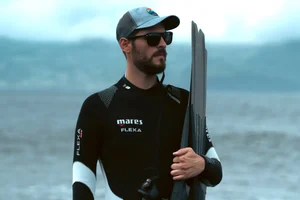
Mobulas and Ocean Megafauna - One Week in La Ventana
For years, I’ve dreamed of witnessing and photographing the mobula ray aggregation, a truly one-of-a-kind ocean spectacle. Seeing hundreds, sometimes thousands, of these winged creatures soar through the water in perfect harmony felt like something out of a nature documentary.
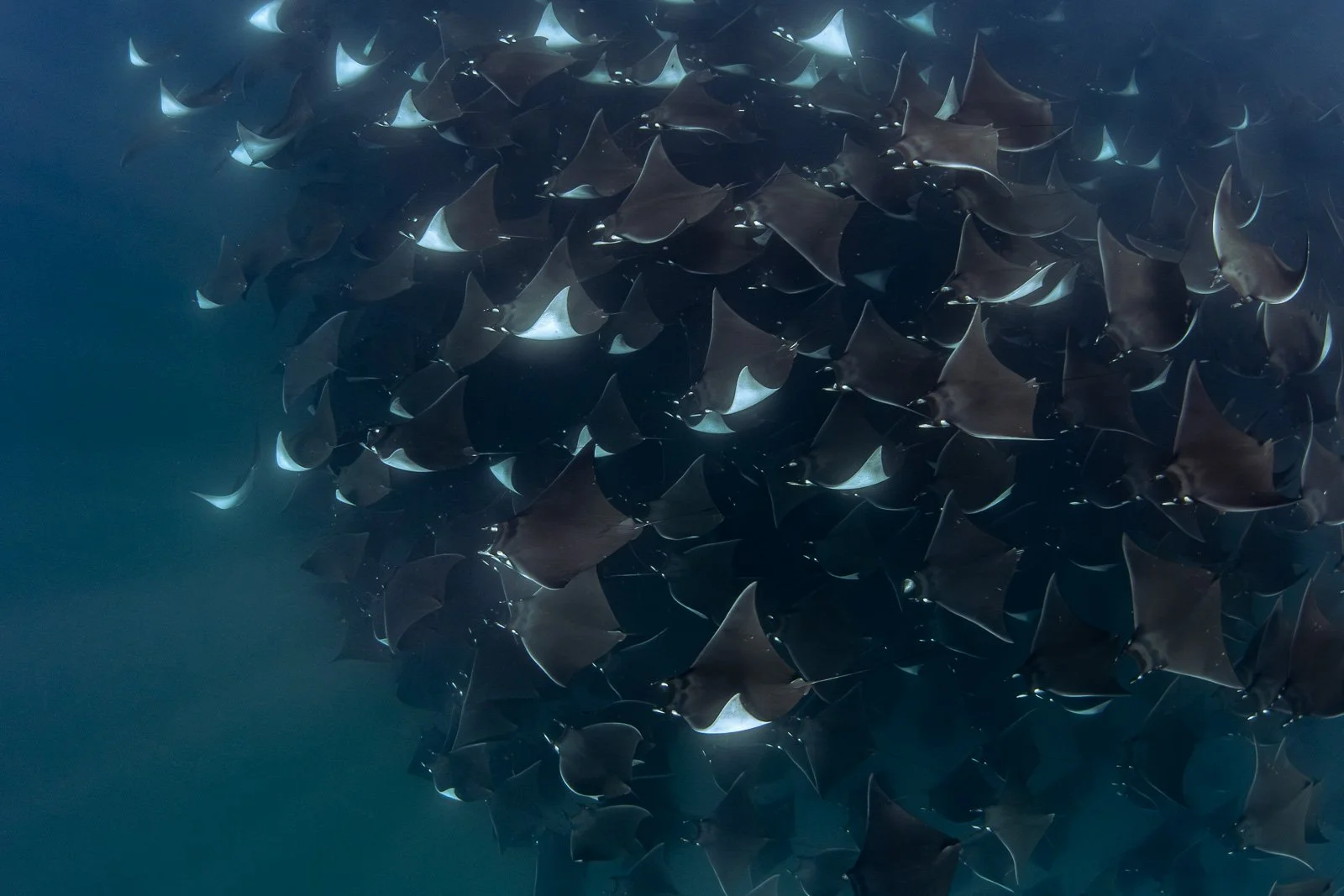
A swirling mass of mobula rays gathers in a shimmering underwater formation.
So when two spots opened up on the final expedition of the season with Latitude Encounters, we jumped on it. With our bags packed and our cameras charged, we headed out to Baja California Sur at the beginning of July.
We've traveled with Latitude before and we love their crew like family. The owners, Mat Fernanda, are more than just passionate ocean people. They're also incredibly experienced and deeply connected to the marine world. Together, they've built a team that's part local expertise, part science powerhouse. A combination of captains who've grown up on these waters, marine biologists, conservationists, and whale fanatics. It's the kind of crew that makes every encounter feel safe and rooted in a love for the ocean.
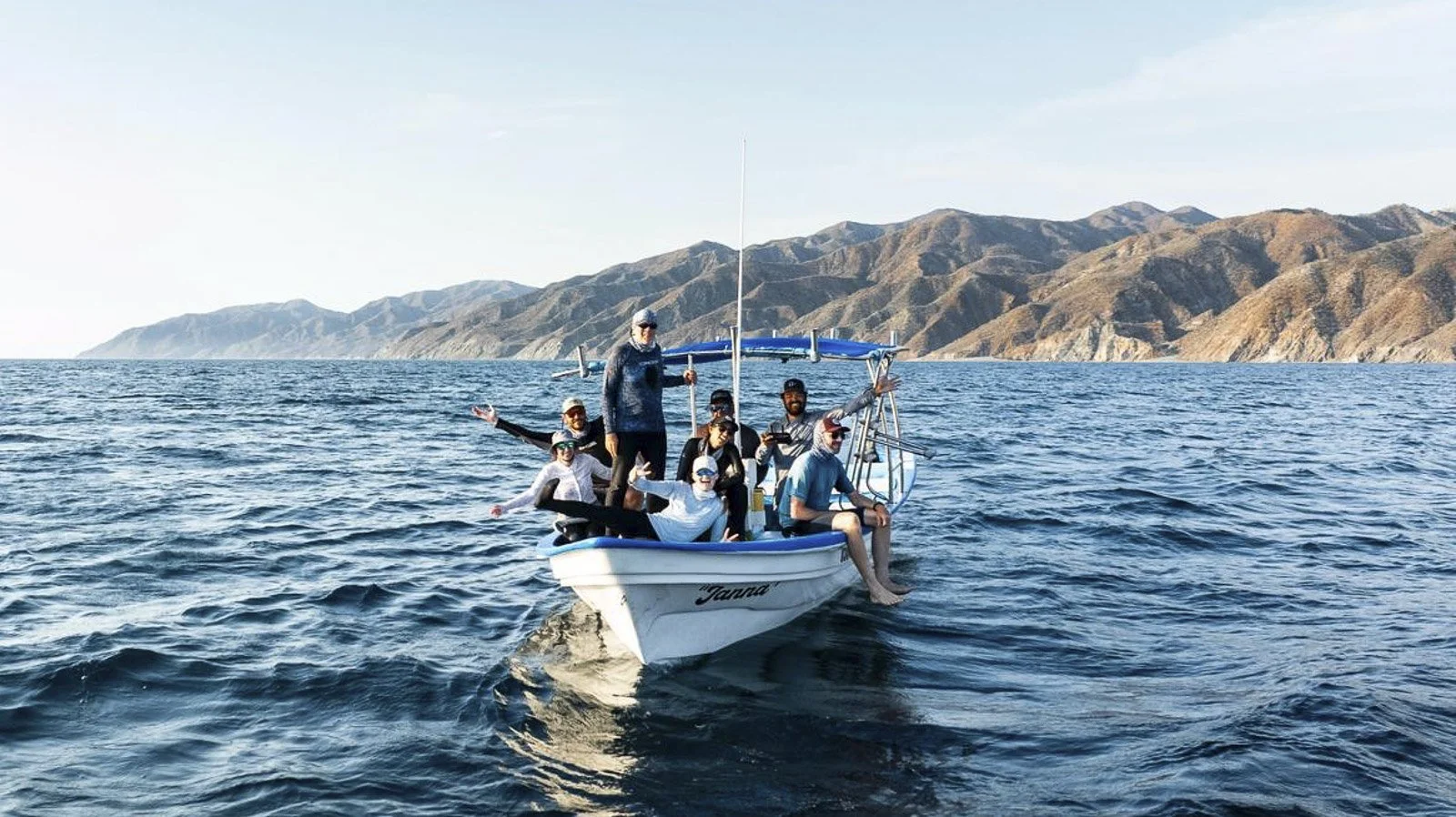
Our expedition crew heading out from La Ventana in search of Baja’s marine giants. Photo by @adamernsterwildlife
The Solo Mission: Finding the Mobulas
There was just one focus for this trip: to find a group of mobula rays and, behavior-permitting, get in the water with them. We had a full five ocean days scheduled, with the aim of heading out around 8 a.m and returning by 4 p.m. Although this sounds structured, the reality is that this expedition is anything but predictable. We were prepared for long days with hours spent scanning the horizon, and finning hard to keep up with the animals once we were in.
Finding mobulas required skill, but equally a lot of luck. Their movements are influenced by a number of factors that we don't quite understand yet, including water temperature, moon phases, and who knows what else. Sometimes they appear to be social and stationary, yet other times they can completely vanish into the blue.
What Makes the Mobula Aggregation So Special?
Each year, from late spring through early summer, the Sea of Cortez becomes a gathering ground for mobula munkiana, which are also known as pygmy devil rays. These small relatives of mantas travel in vast numbers, sometimes forming superpods of thousands of rays. Together, they feed, socialize, and likely mate.
Scientists are still studying the full purpose of the aggregation, but what’s clear is that it’s a sensory overload: rays flying out of the water in bursts of acrobatic flips, shimmering schools weaving just beneath the surface, and that electric energy that fills the sea when it feels like something big is about to happen.
It’s one thing to see a single mobula. It’s another thing entirely to hover just above a swirling tornado of hundreds, gliding in formation like a cloud of birds. When you dive down and meet them eye to eye, it’s like stepping into an underwater dance you’ll never forget.
An Unexpected Start
Our expedition started off with a bit of chaos. We had anticipated bad weather and knew we might lose a day on the water. To make up for it, Fernanda made the call to take everyone out on the day of arrival. For reference, this is a day that’s usually reserved for rest and briefings. Everyone else was already out by morning, but we were still in the air. To make matters even worse, our flight was delayed for hours due to a mechanical issue.
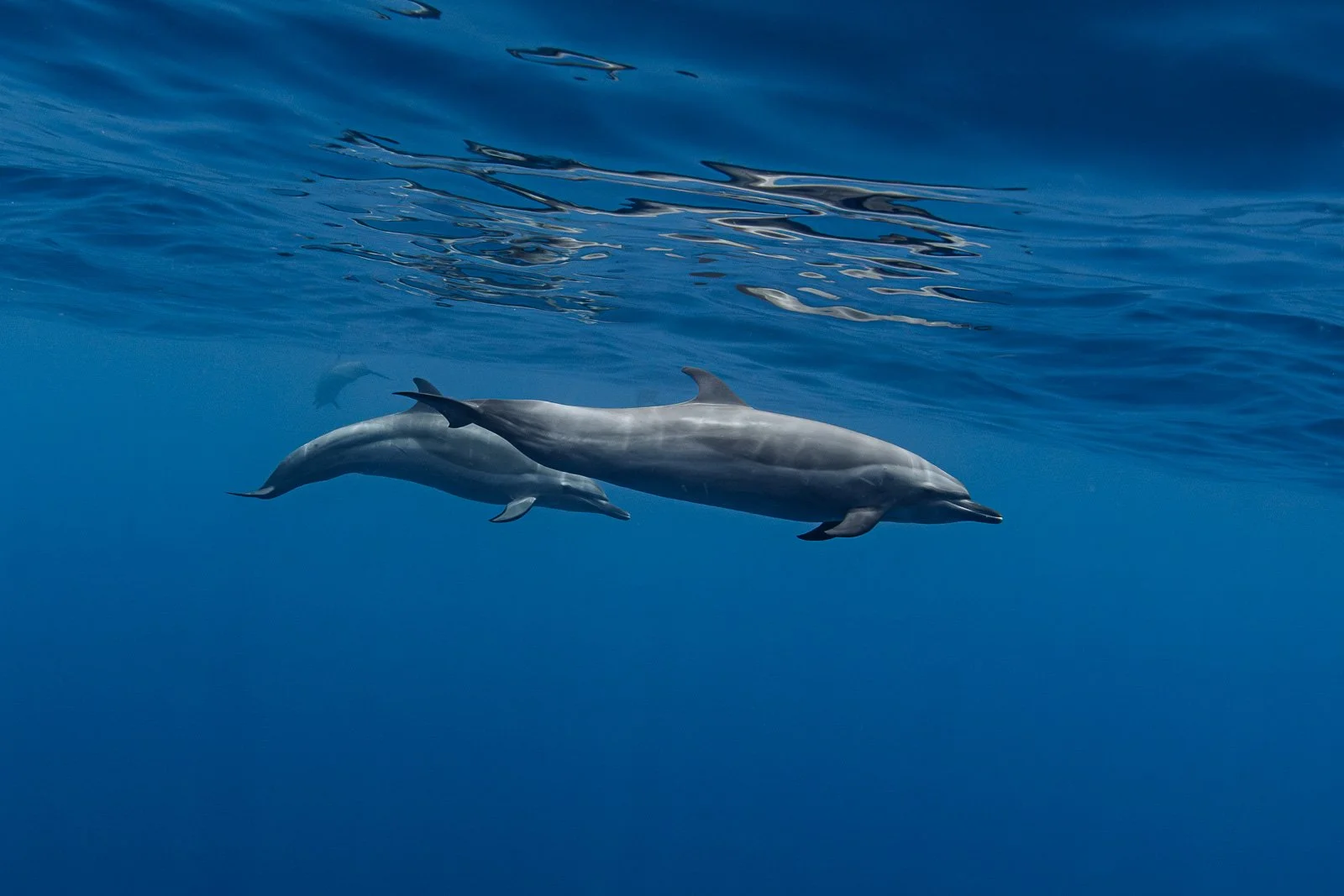
Pantropical spotted dolphins surfing the surface currents in Baja.
My wife, Nori, high on Dramamine, had the sleep of a lifetime. Meanwhile, I was sweating bullets, knowing what we might be missing. But rest assured, Fernanda had our backs. When we finally landed, she arranged a separate boat just for us, and it was more than worth the effort. We were met with calm, glassy seas and an unforgettable encounter with a pod of pilot whales, curious silky sharks, and dolphins all within a few magical hours.
Mobulas in the Shallows, Mobulas in the Blue
Each day brought us something new. Early in the week, we found a small group of mobulas gliding through the shallows, just off the shoreline. They didn’t linger long, and we didn’t push them. Our team is deeply committed to keeping wildlife interactions ethical and on the animals’ terms.
The following day, we got word of a larger aggregation near Cabo. We packed our gear, made the drive, and after a short search, found them not far from shore. For nearly an hour we swam among the school, watching as hundreds of mobulas pulsed through the water like a single living body. Every so often, individuals would burst from the surface in acrobatic leaps or engage playfully with one another. This kind of behavior was likely part of a mating ritual. It was such a spectacle, an ocean ballet unfolding before us and a must-see for every ocean lover.
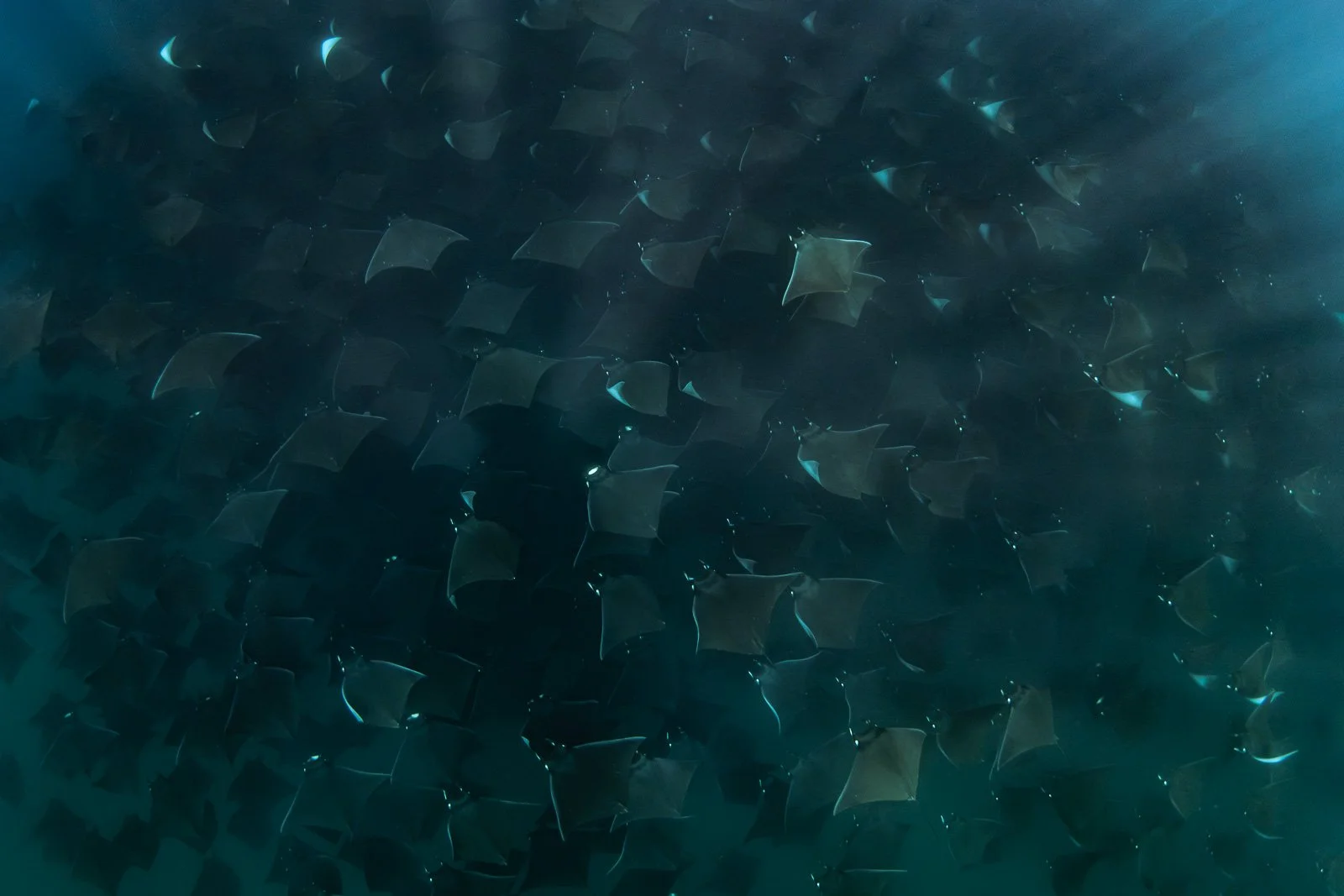
Hundreds of mobula rays glide in unison through Baja’s emerald waters.
Mobulas have long been a symbol of the Sea of Cortez, yet their survival hasn’t always been secure. For years they were targeted for their gill plates, used in traditional medicine, and often caught as bycatch in industrial fisheries. Today, all mobula species are protected under international agreements like CITES, and Mexico has made strides in safeguarding them within its waters. Even so, their future depends on continued conservation and responsible ecotourism. We must create encounters that celebrate their presence without disturbing it.
Baja’s Other Ocean Surprises
The Sea of Cortez has a way of showing off when it wants to.
One day we came across a pod of pan-tropical spotted dolphins, which is a species that is often a little more curious about humans than other dolphins in the region. Keeping up with them takes effort; you have to anticipate their path and swim where they’re going rather than where they are. Even a fleeting two-second interaction, a quick pass in the blue, is worth every kick.
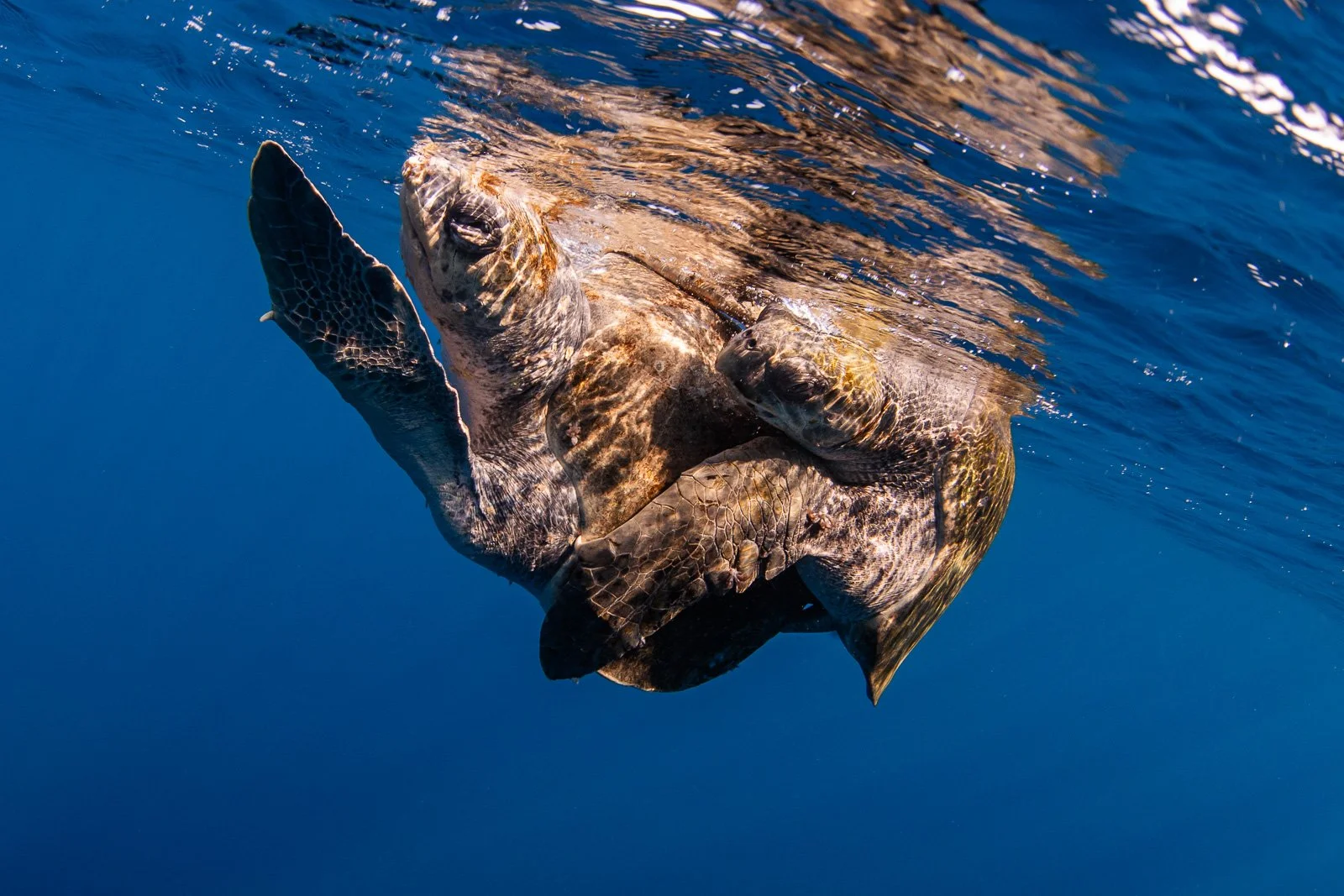
Olive ridley sea turtles locked in a mating embrace beneath the surface.
Between the dolphins and the mobulas, we also witnessed Olive Ridley turtles mating, a common sight in these waters at this time of year. We then had an unforgettable encounter with a juvenile manta ray. We were lucky enough to spend nearly 20 minutes gliding alongside it before it disappeared into the deep blue.
Mobulas to Sharks
From the mobula ray expedition, we shifted straight into photographing silky sharks. These sleek, fast-moving pelagic predators gather in Baja during the summer months, drawn by warm waters and schools of baitfish. Unlike reef sharks, silkies rarely sit still. They cruise constantly, circling boats out of curiosity, sometimes coming in close, sometimes vanishing into the blue.
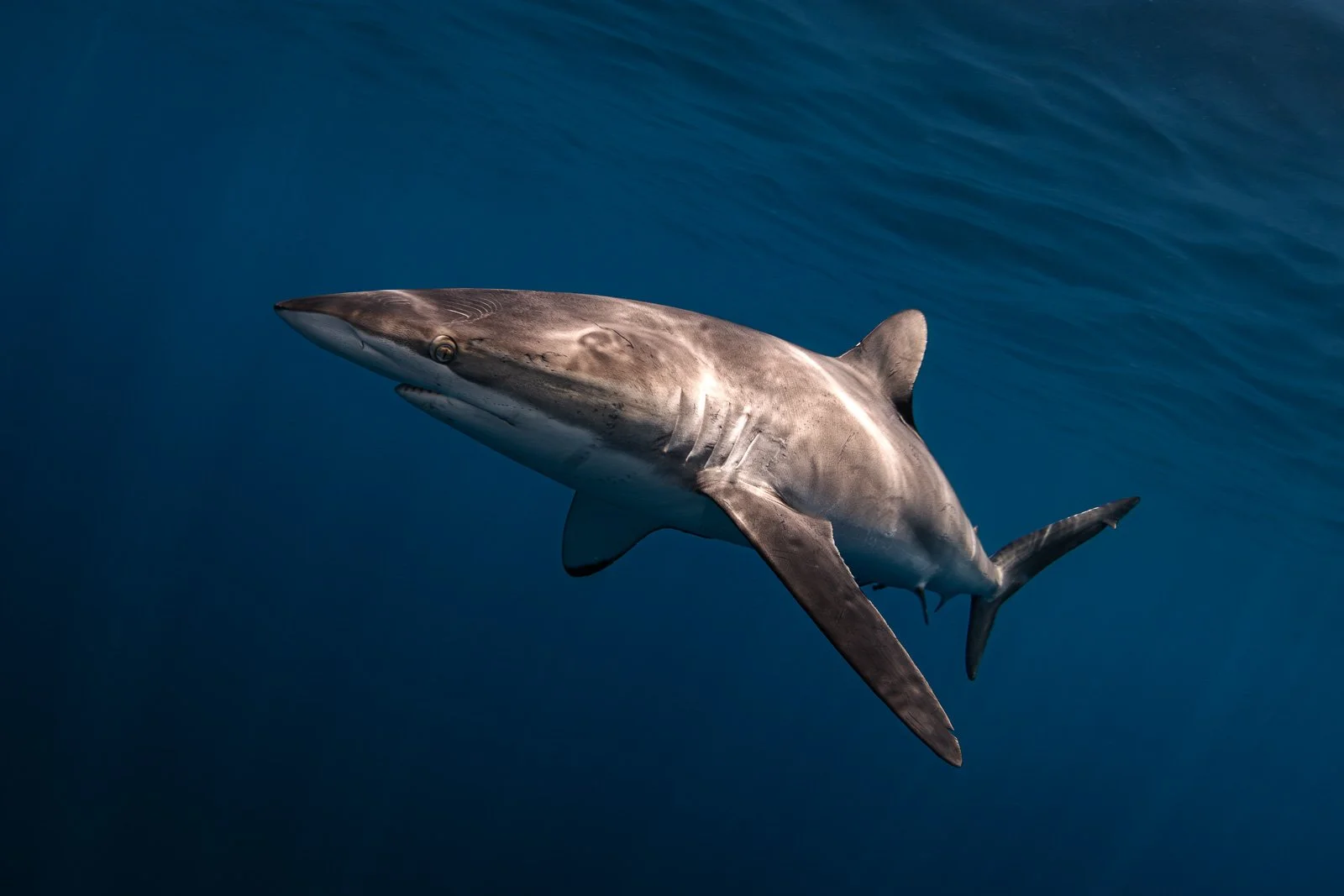
Silky shark cruising through the open waters of Baja California Sur.
Photographing pelagic sharks isn’t easy. They don’t just materialize on cue and it can take hours of chumming and patience, often in rough seas. Their behavior is equal parts cautious and bold, which makes every close pass electrifying. The conditions swung between miserable and magical, and I battled through the worst seasickness I’ve ever had. But the reward was worth it: two unforgettable days with at least half a dozen intensely curious silkies.
I’d been wanting to experiment with long-exposure shots for a while and this was the perfect chance to push that creative side. The goal was to try to capture not just the sharks themselves, but their movement and energy in the water.
Conservation and Community
Baja California Sur is full of marine diversity that's hard to come across anywhere else in the world, but it's also a place that's under increasing pressure. Various things like industrial fishing, deep sea mining, and unethical tourism are all taking their toll, and it's a stark reminder that these animal encounters are not something that we can take for granted.
Earlier this year, one of my images was featured at the Dos Mares Gala, and through that I was invited to join the newly formed Mexico League of Conservation Photographers, an initiative by FOMARES. It’s a community of visual storytellers, supported by Cristina Mittermeier, working to highlight Mexico’s biodiversity and the challenges it faces
If you’re a photographer passionate about conservation, whether you work above or below the surface, I’d encourage you to look into the League and get involved. It's a great way to connect your images to a larger purpose and helps give a voice to Mexico's wild places. Feel free to reach out to me directly if you’d like to learn more or explore joining.
On Ethical Wildlife Encounters
There’s always a temptation to push for the shot, to get a little closer. But some of the most powerful moments happen when you simply observe. Just sharing space with animals on their terms. Latitude does an excellent job here. If the animals are too deep, too skittish, or seem disturbed, we wait. Or we move on. That kind of respect sets the tone, and it’s something I value deeply.
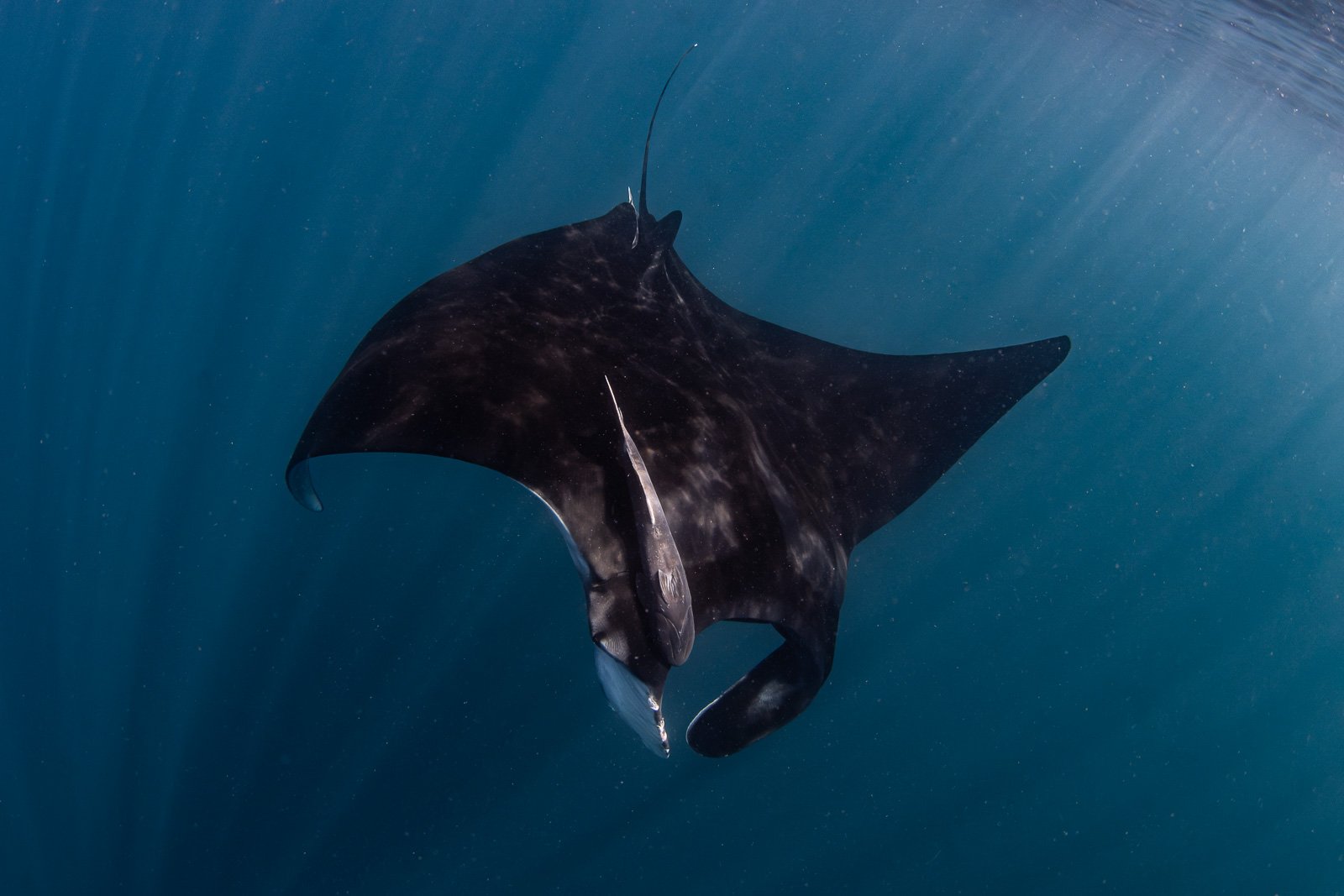
A young manta ray sweeps through rays of light off the coast of La Ventana.
Tips for Photographers
Be prepared: Wildlife encounters can happen within seconds, so you need to be ready at any moment. Make sure that your camera is set up before you actually get in the water, and check that all your gear is ready. Be prepared to fin quickly and cover some distance to get the shot you want.
Go wide: Wide-angle lenses (rectilinear or fisheye) are the best for capturing the scale and movement of animals. Leave the macro lens at home unless you’re on a dedicated macro dive.
Work with natural light: Most encounters happen near the surface where the sunlight is abundant. This means you can get away with skipping the strobe. It rarely adds any value to your photos in these conditions, but it definitely will add unwanted drag. That said, I'll sometimes bring strobes on shark dives, where controlled light can add depth and detail to the shots.
Respect the animals: Keep your distance, follow your guide’s instructions, and let the wildlife make the choice to approach. The most memorable encounters are always on the animals’ terms. Never compromise safety for a shot.
Aerial perspective: Drones are great tools for giving overviews of wildlife and seascapes. You must fly responsibly though, by maintaining distance and minimizing disturbance to both animals and other divers.
If you’re interested in getting into ocean photography, I have an article on tips to plan your trip here.
Final Thoughts
This trip was everything I hoped for and then some. Wildlife encounters aside, I’m grateful for the people I met, the conversations I had, and the moments I shared with my wife in the water. There’s something magical about spending hours scanning the sea with strangers who become friends, all of us hoping for that one perfect moment. And when that moment comes, when the ocean delivers, and you’re there to witness it, it stays with you forever.
Until next time, Baja.