Capturing Giants: Whale Expedition in French Polynesia
We had heard a lot about French Polynesia from friends in Baja and had been dreaming of going for a while, though we thought the trip would have to wait another year.
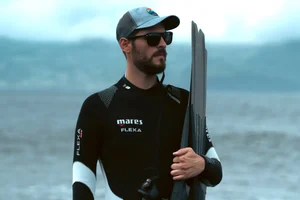
Then, out of the blue, Uncharted Expedition posted that they had two open spots for an eight-day whale trip. Naturally, we jumped at the chance! It wasn't until later that we would find out that our trip leader would be none other than award-winning photographer Álvaro Herrero - @mekanphotography.
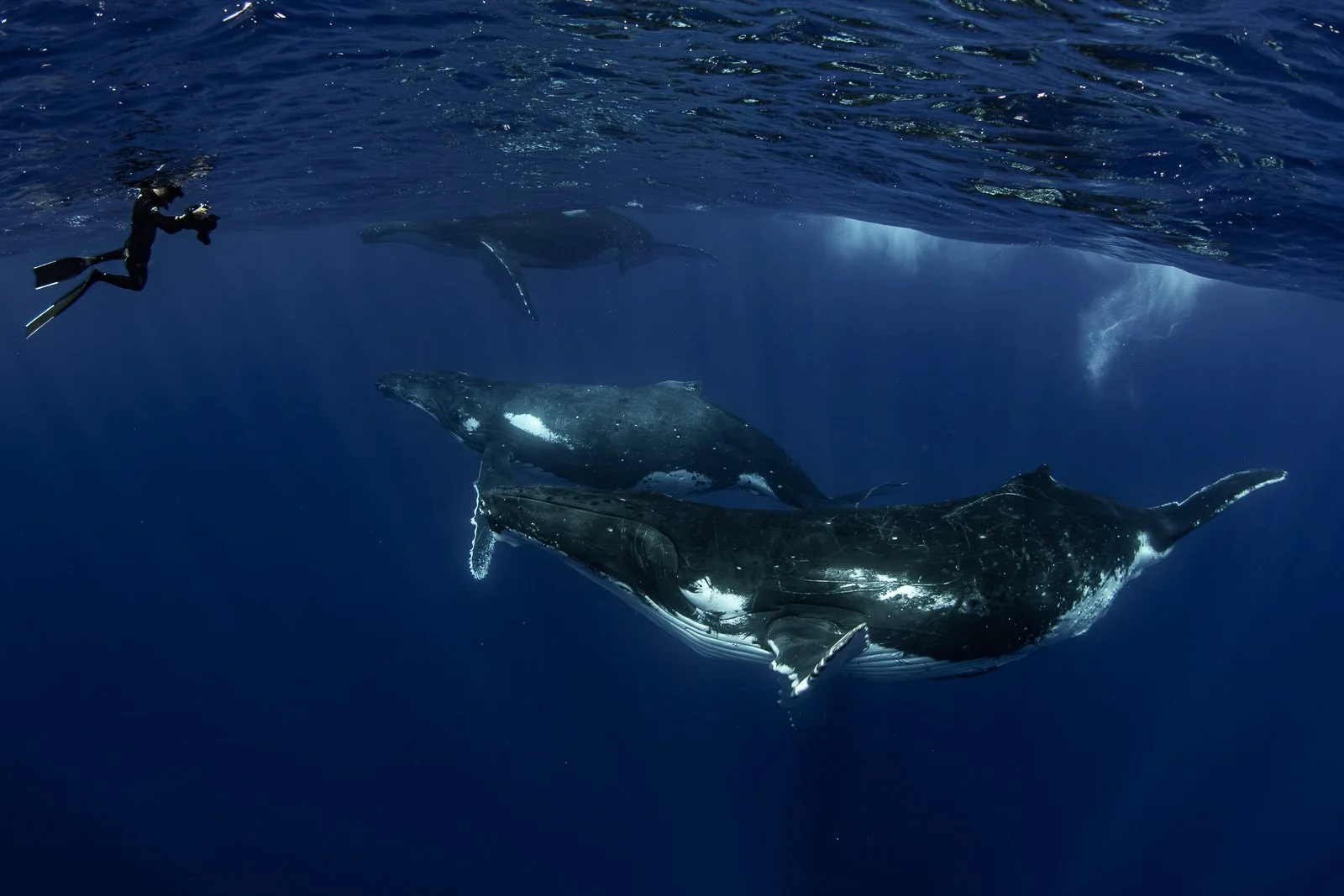
Photographer (@dantaylor_photo) and a trio of humpback whales in Moorea.
Why Moorea?
There aren't many places on the planet where you can legally swim with humpback whales, and for good reason. Two of the best-known are the Kingdom of Tonga and Moorea, which is in French Polynesia. We still haven't been to Tonga, but both spots are considered to be prime destinations for encounters with humpback whales. Some people prefer one over the other but in reality, both of them have their own kind of magic to explore.
We were flying in from Austin, Texas, so it was fairly straightforward to get there. We spent some days in San Francisco before continuing on to Papeete, Tahiti. From there, it was just a short ferry ride across the channel to Moorea. Believe us, this is an island that feels like a world of its own from the moment you arrive.
Something that immediately struck us was the way that everyone seemed to describe Moorea. Beyond the love of the lush mountains and unbelievable lagoons, people spoke of the island as if it carried something deeper and more spiritual. The locals take great pride in their Polynesian heritage and culture, so it's impossible not to feel that same sense of reverence once you're there. It's easy to see why, especially with the annual arrival of the humpback whales. Moorea quickly became a place that felt more magical than anywhere else we've visited in the world.
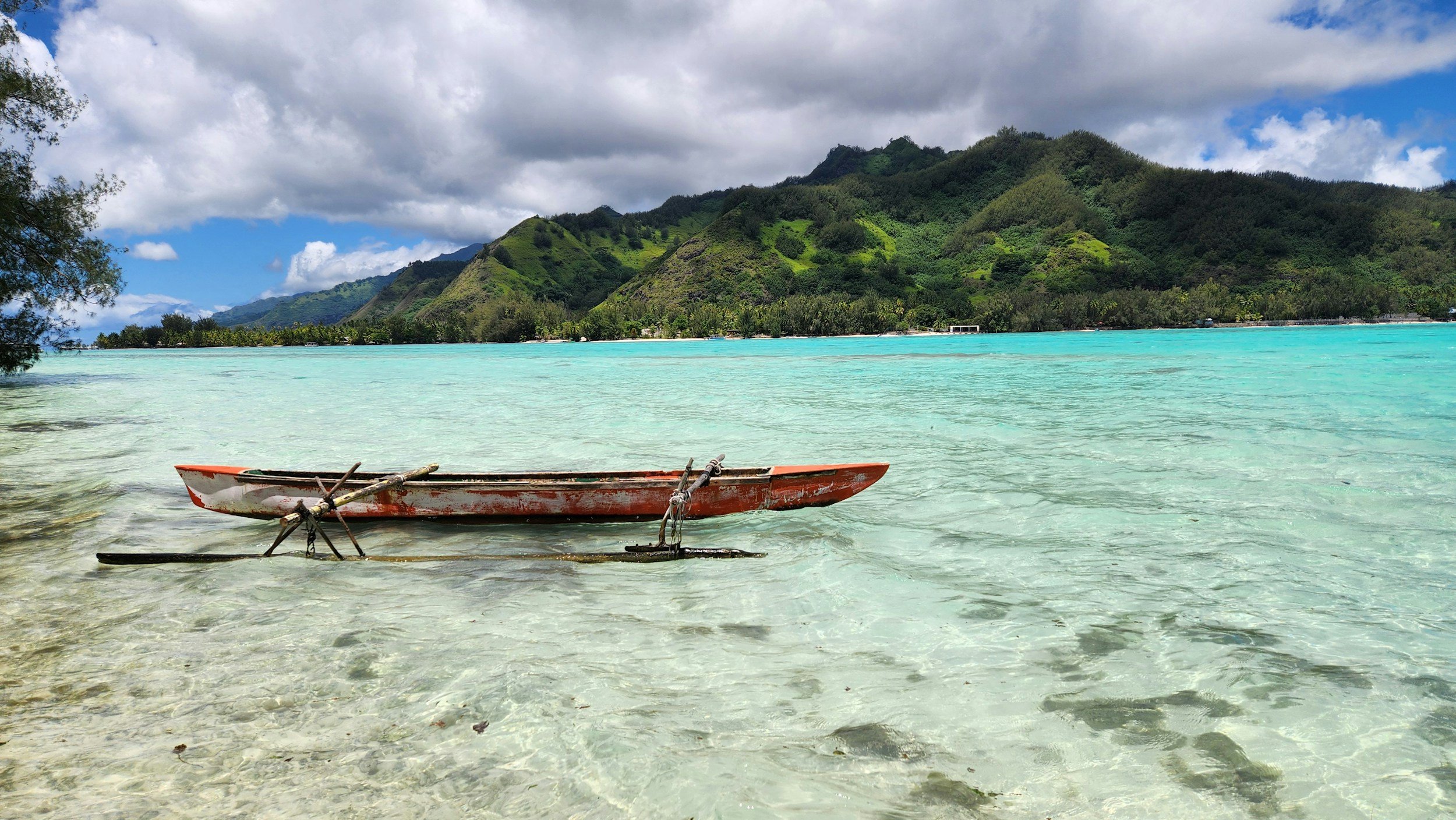
A wooden outrigger canoe anchored in the shallow lagoon of Moorea.
Some facts about Moorea:
Moorea is part of the Society Islands in French Polynesia, which is found around 17 kilometers northwest of Tahiti. It has a uniquely beautiful landscape filled with volcanic peaks and emerald green valleys. As such, it has earned the nickname "the magical island".
Every year between July and November, humpback whales migrate thousands of miles from Antarctica to the much warmer waters of French Polynesia. While there, they make use of Morrea's sheltered lagoons and offshore waters as a breeding and calving ground.
Moorea doesn't just give you the chance to see whales from the surface. Unlike many destinations, you can get the opportunity to respectfully swim alongside them under regulated conditions.
New Year, New Regulations
When we signed up for the Moorea expedition, we knew that swimming with humpback whales is a privilege few places in the world allow. What we didn’t anticipate was just how fresh many of the legal changes would be, some only taking effect in 2025. These new rules reflect a growing concern about the impact of tourism pressure on whale behavior and welfare.
Swimming with whales in Moorea has always been regulated, but the rules have changed a lot over the years. In the past, it wasn’t unusual to see several boats crowding around the same whale, with large groups of swimmers in the water at once. The minimum swim distance was set at about 30 meters, though in reality encounters often got closer.
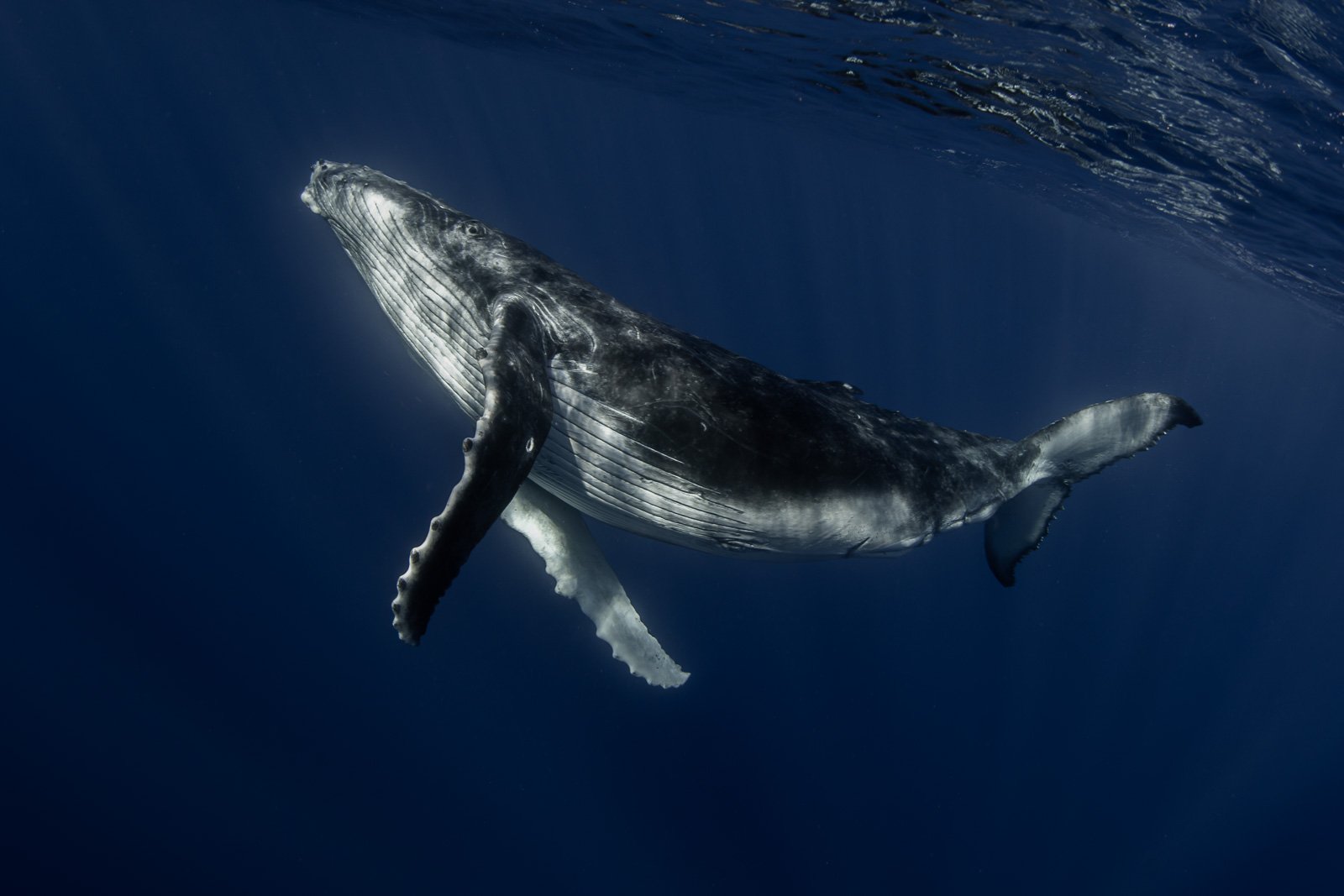
Humpback whale calf cruising just below the surface in Moorea.
Starting in 2025, things look different. Now only three boats are allowed near the same whale, each company can only send one boat at a time, and swimmer groups are limited to seven people including the guide. The swim distance has officially been reduced to 15 meters, boats have stricter approach rules, and encounters are only permitted during set hours (7:30 AM–5:30 PM). Everyone also has to wear either a wetsuit or a flotation vest, and diving beneath is no longer allowed. This is especially true for calves and mothers.
These changes were designed to ease the pressure on the whales and create calmer, more respectful encounters.
What does this mean for photography?
From a photography perspective, the new rules don’t really change much. Almost all of the best interactions with humpbacks happen at or near the surface. Really, there’s no need to dive deep to capture them. In fact, staying at the surface often gives you a better angle to frame the whale’s full size against the blue behind them.
I believe the wetsuit requirement, which some people see as a hassle, is actually not a bad idea. It provides extra protection against the elements and makes it easier to stay steady in the water.
The biggest challenge is the distance. Since boats can’t get as close as before, a lot of encounters begin with long swims. Sometimes it’s hundreds of meters of intense finning just to get into position. Even then, the whale might slip away before you get the shot. It’s the reality of wildlife photography: every encounter is a gamble, and that makes the successful ones even more rewarding.
All in all, I personally support stricter regulations. At the end of the day, it’s not about us and our needs. It’s about the whales, and if these changes give them a little more space and peace, that’s a win worth swimming for.
There’s magic in those waters - Whale Encounters
Every day that we were on the water brought us something different. Part of the magic of Moorea is that you never really know what you'll find, and every encounter truly feels like a gift.
Sleeper Whales
One of the most surreal experiences we had was drifting near “sleeper” whales. These giants hang motionless in the water column, resting vertically with their heavy heads pointed down into the blue. Being in the water with them is almost dreamlike. It feels as though time slows down and your breath grows louder in your ears. It's here that you realize just how enormous and peaceful these animals are.
Sometimes you can even hear them producing low sounds, something that's part song, part snore. It's so powerful that your whole body seems to vibrate with the resonance. Floating there, suspended alongside a whale in its rest, is a moment that feels both otherworldly and deeply humbling.
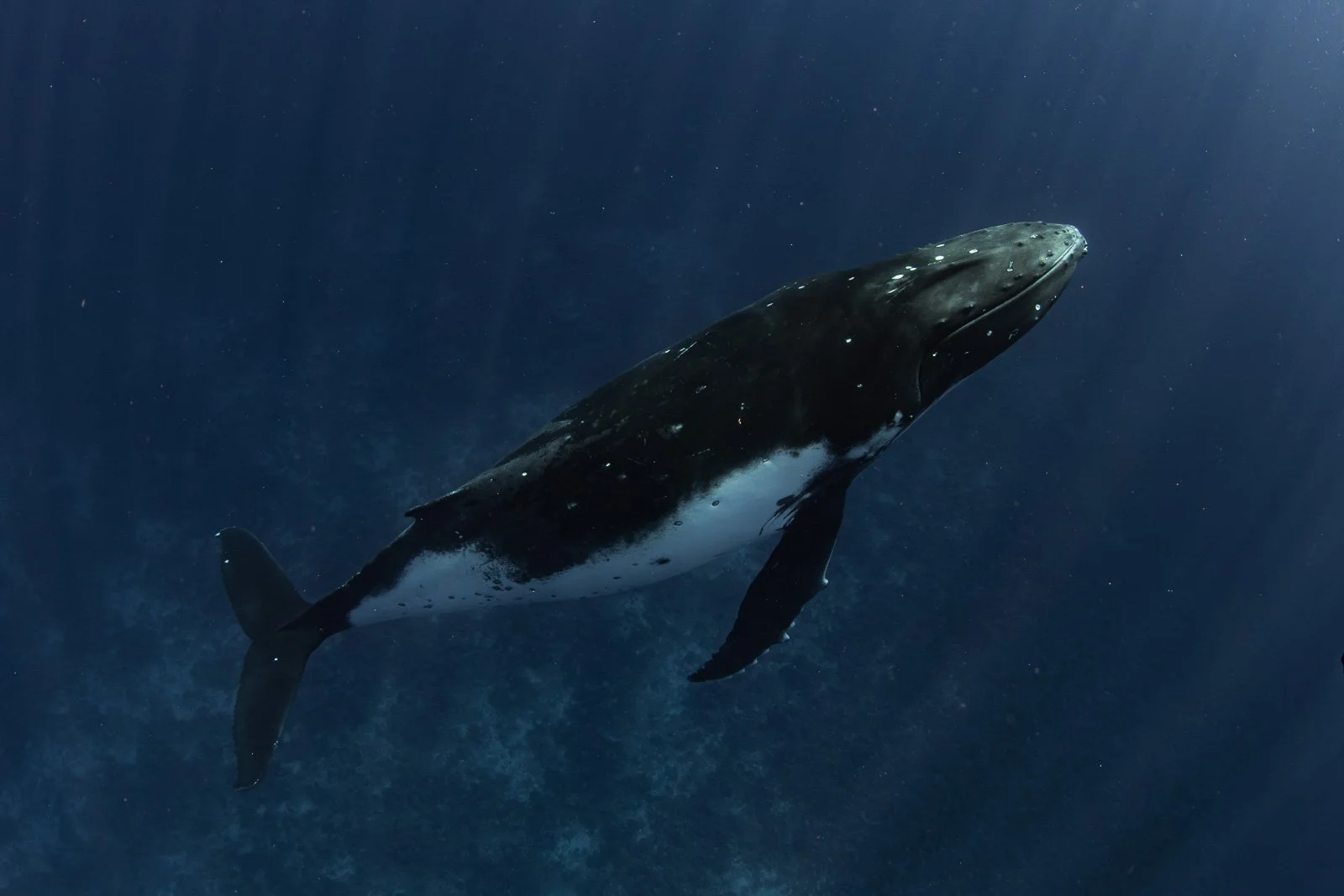
Sleeping humpback whale resting motionless in the deep blue off Moorea.
Breaching Whales
On some days, the ocean felt electric. We watched humpbacks breach again and again, with their entire bodies somehow launching out of the water and arcing through the sky before crashing back in with a thunderous splash. Even though we were on the boat, we could feel the movement in our chests.
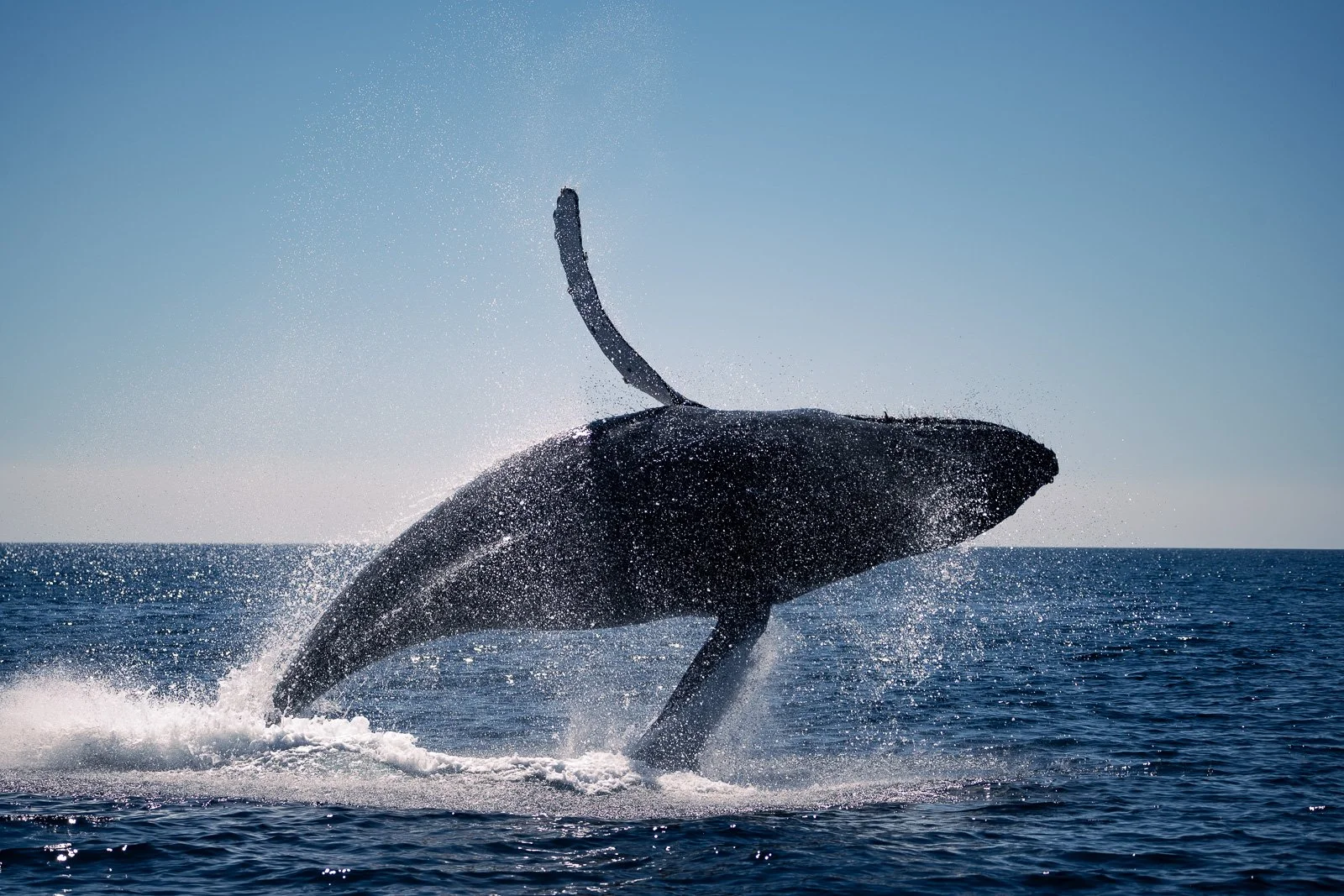
A humpback whale launches out of the water in a full-body breach, sending spray in every direction.
No one really knows why they do this for sure, but scientists believe that breaching serves several purposes. The sound and the splash might be a form of communication, especially during times when wind or waves might make their singing less effective. It can also be a social display, something like a show of strength during courtship or competition. Other people think it helps to dislodge parasites and barnacles, while some argue it may simply be play, an energetic burst of joy from a forty-ton giant. Most likely, it’s a mix of all these things.
Heat Run
A heat run occurs when multiple male humpback whales aggressively compete for access to (or escorting rights with) a female. The female is often chased, and males try to maneuver themselves into dominant positions. These encounters are among the most energetic and intense displays in whale behavior. In fact, it's so intense that male whales can often be seen with scars from past battles. These heat runs can last for several hours, and the whales can travel for long distances (tens of kilometers) during the chase.
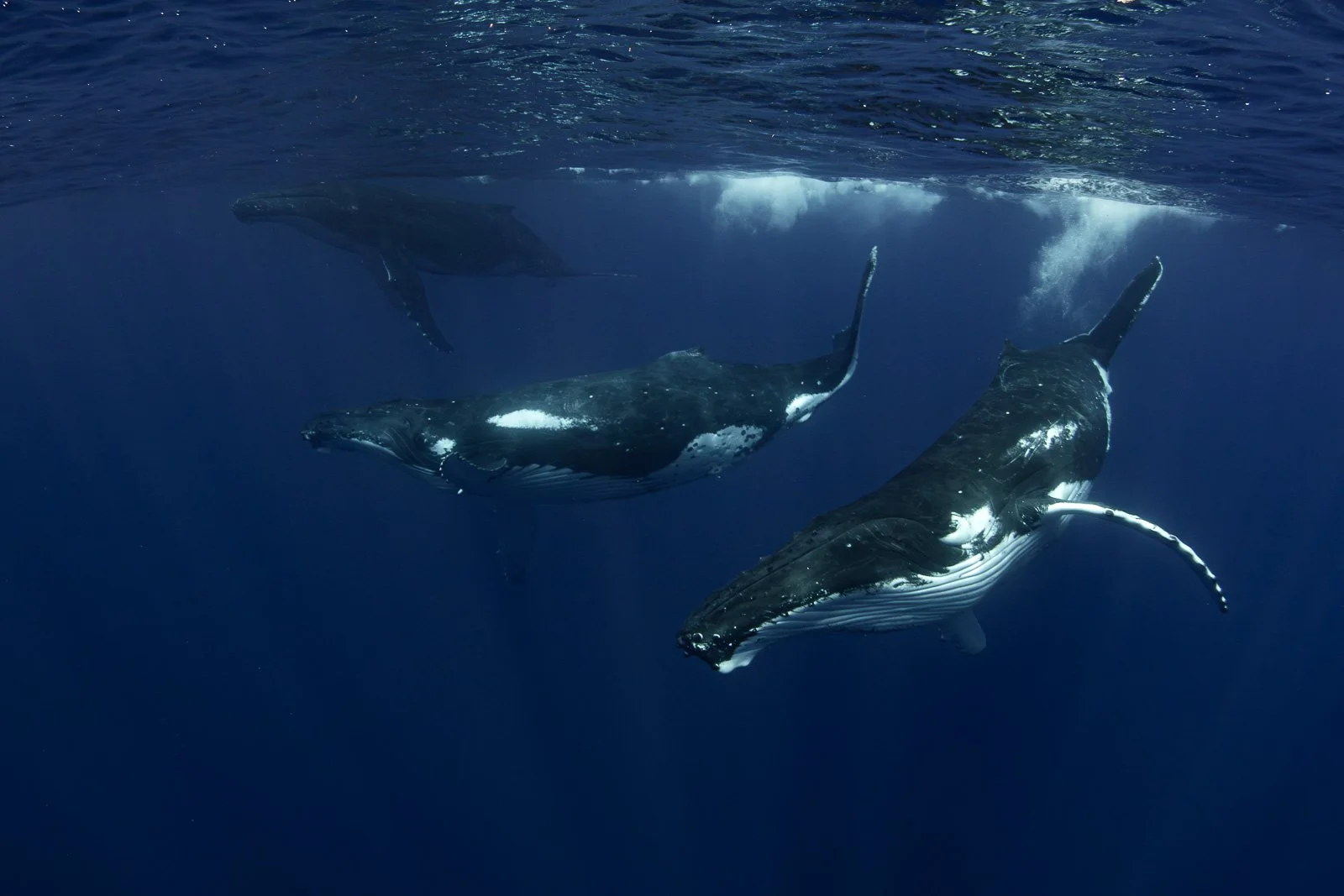
A group of humpback whales charges forward in a heat run, competing for the attention of a female.
Mother and Calf
The most tender encounters, though, are with mothers and their calves. Watching a mother hover protectively as her calf surfaces to breathe or rolls in play is something you don’t forget. Sometimes the calf’s curiosity brings it closer, peeking at you before darting back to its mother’s side. These moments are humbling and a reminder that you’re witnessing the very beginnings of a whale’s life.
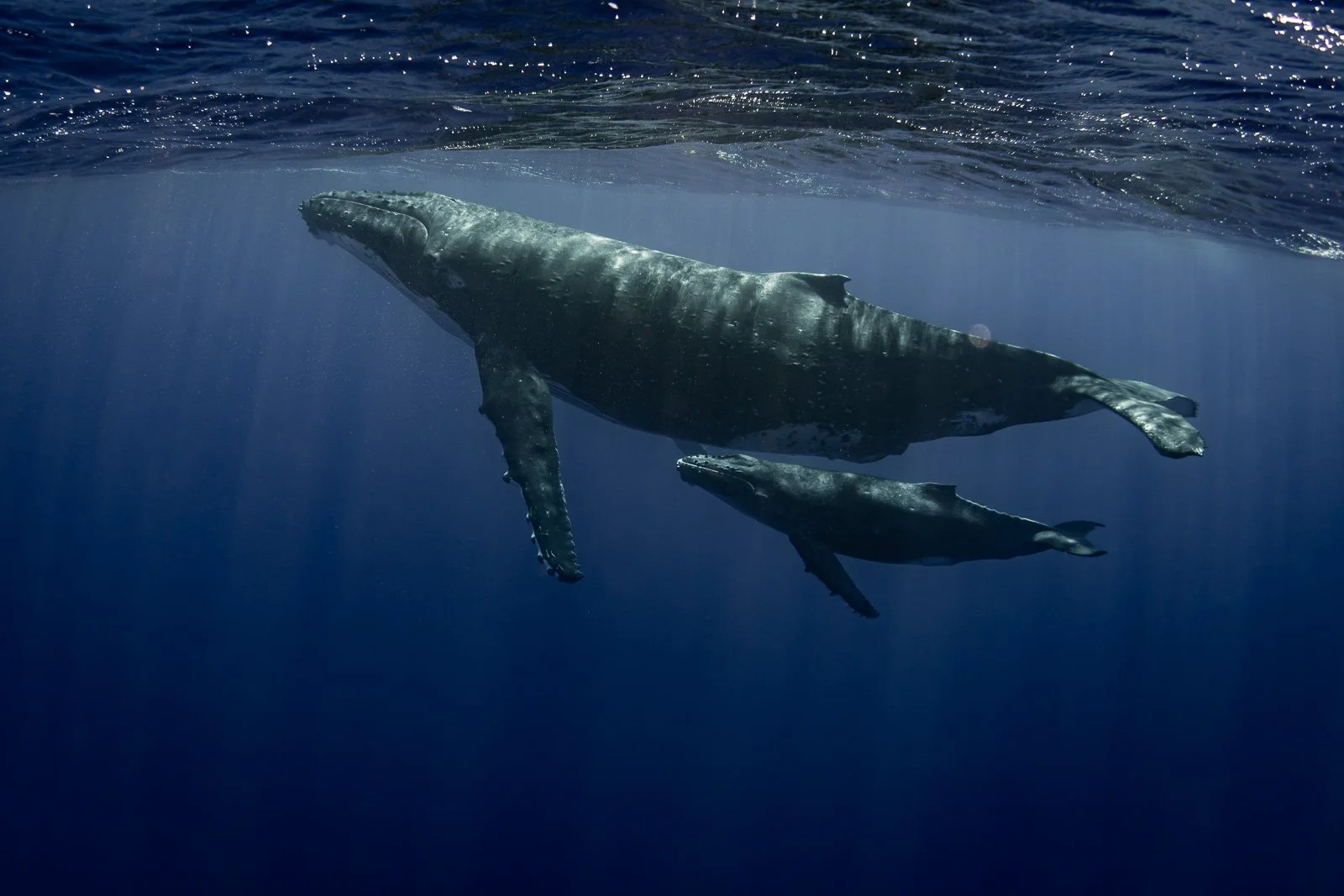
A humpback whale mother glides slowly beneath the surface with her calf close by, mirroring her every movement.
Interspecies Encounters
And sometimes Moorea surprises you with more than just whales. We came across pods of spinner dolphins and even pilot whales sharing the same waters. Watching humpbacks moving calmly among other species made the ocean feel even more alive. It was as if we were peeking into a much larger story that’s constantly unfolding beneath the waves.

A curious pilot whale approached us and lingered just long enough for a close-up encounter.
Parata Season 🦈
This year felt like Parata season, with Parata being the Polynesian word for oceanic whitetip shark. An unusual number of these open-ocean predators were showing up close to shore. Oceanic whitetips have a reputation for being unpredictable, and at times aggressive, which makes them both fascinating and formidable. These sharks can change their behavior in an instant, and there have even been cases of them charging at people.
As an avid shark diver, I was dying to see them and photograph them. But the local guides and operators weren’t willing to take the risk. After all, this was a whale expedition, not a shark one, so it was totally understandable.
Beyond the Whales – Afternoons in Moorea
While most mornings were dedicated to chasing whales offshore, the afternoons gave us time to slow down and explore Moorea in other ways. One of our favorite rituals was kayaking out to the lagoon where blacktip reef sharks and stingrays cruise through shallow turquoise water. It’s an incredible spot for photography, especially for split shots, with sharks below and Moorea’s jagged peaks rising in the background. Feeding is not allowed here, but it doesn’t really matter. You’ll find that the animals swim close on their own, curious and unbothered.
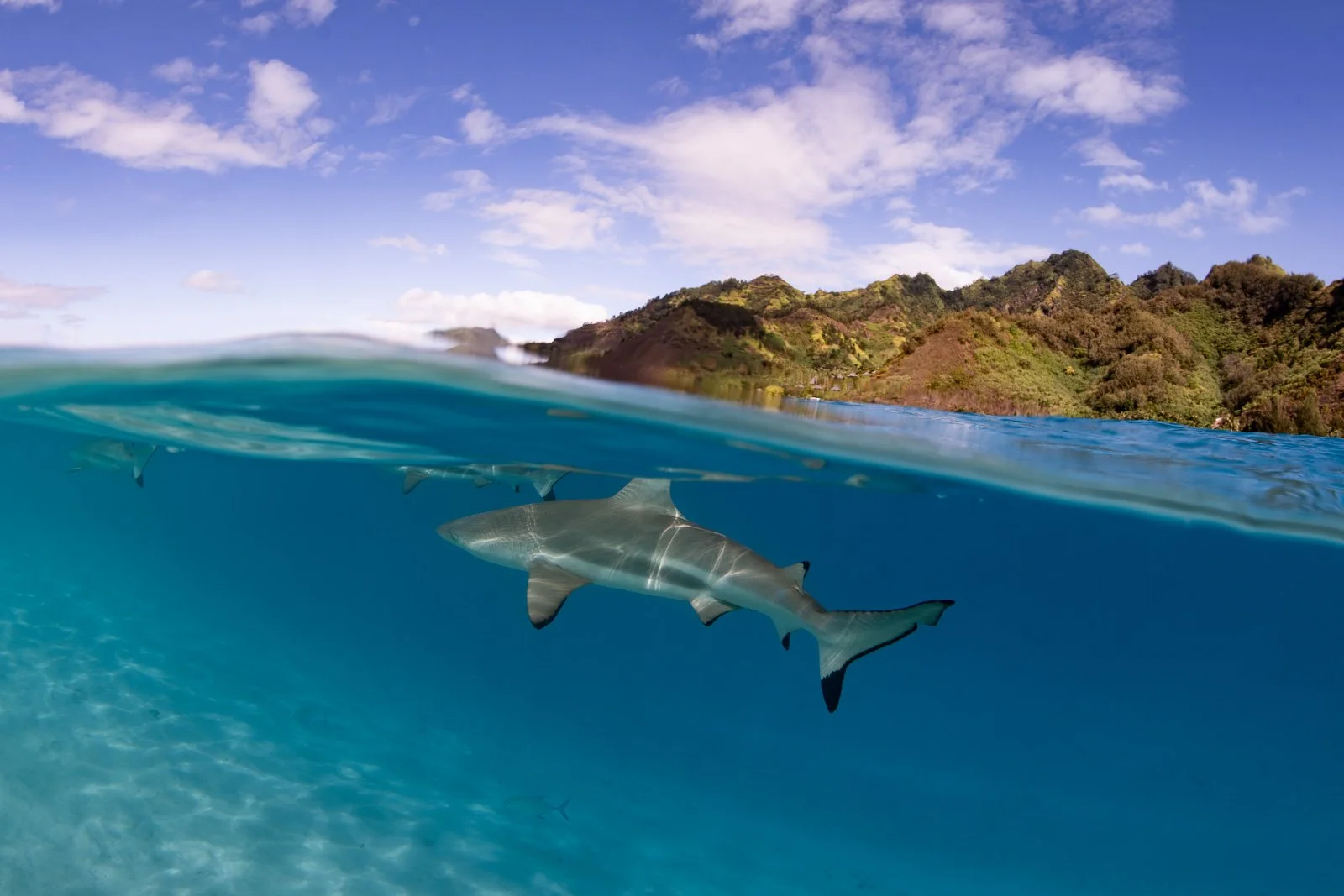
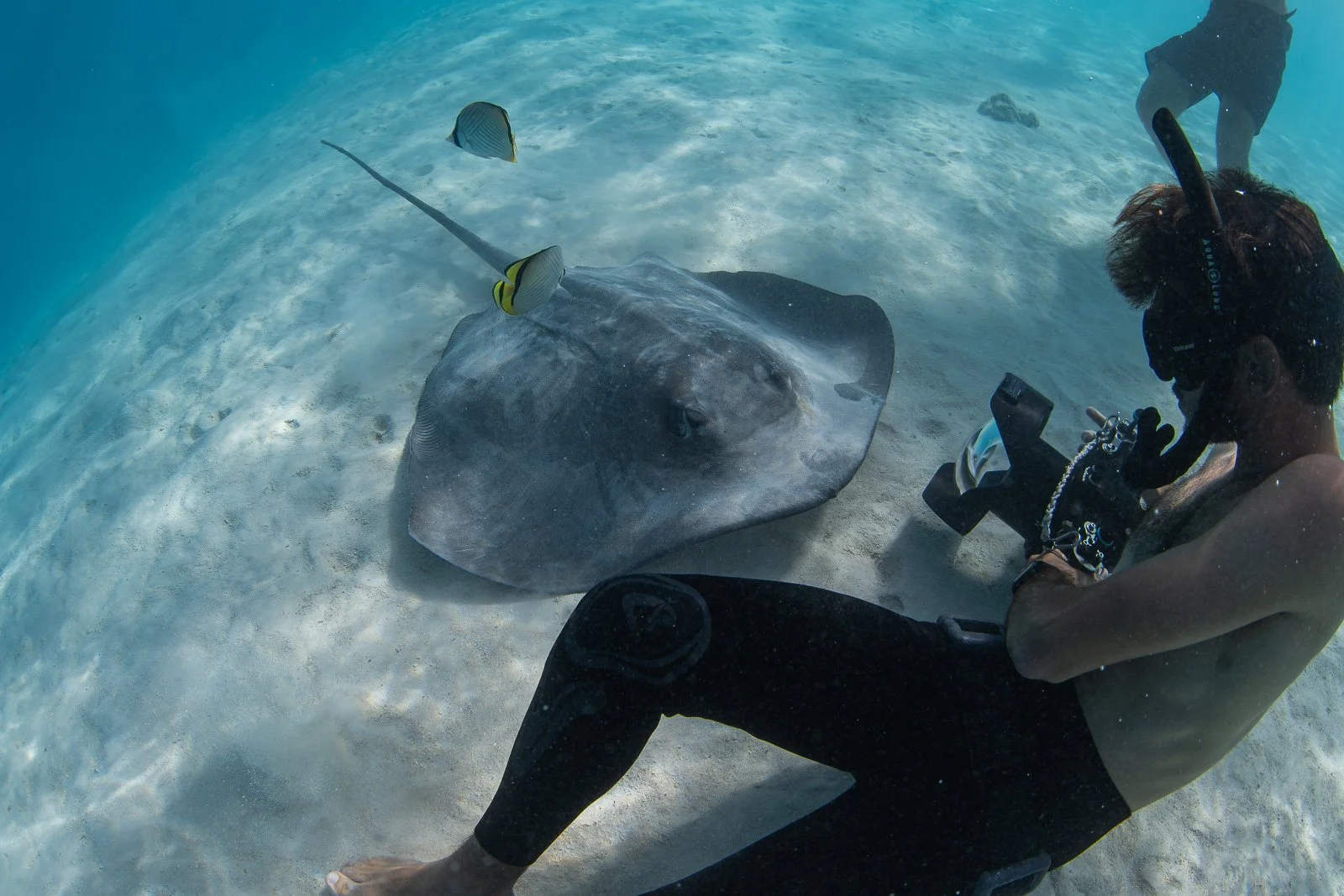
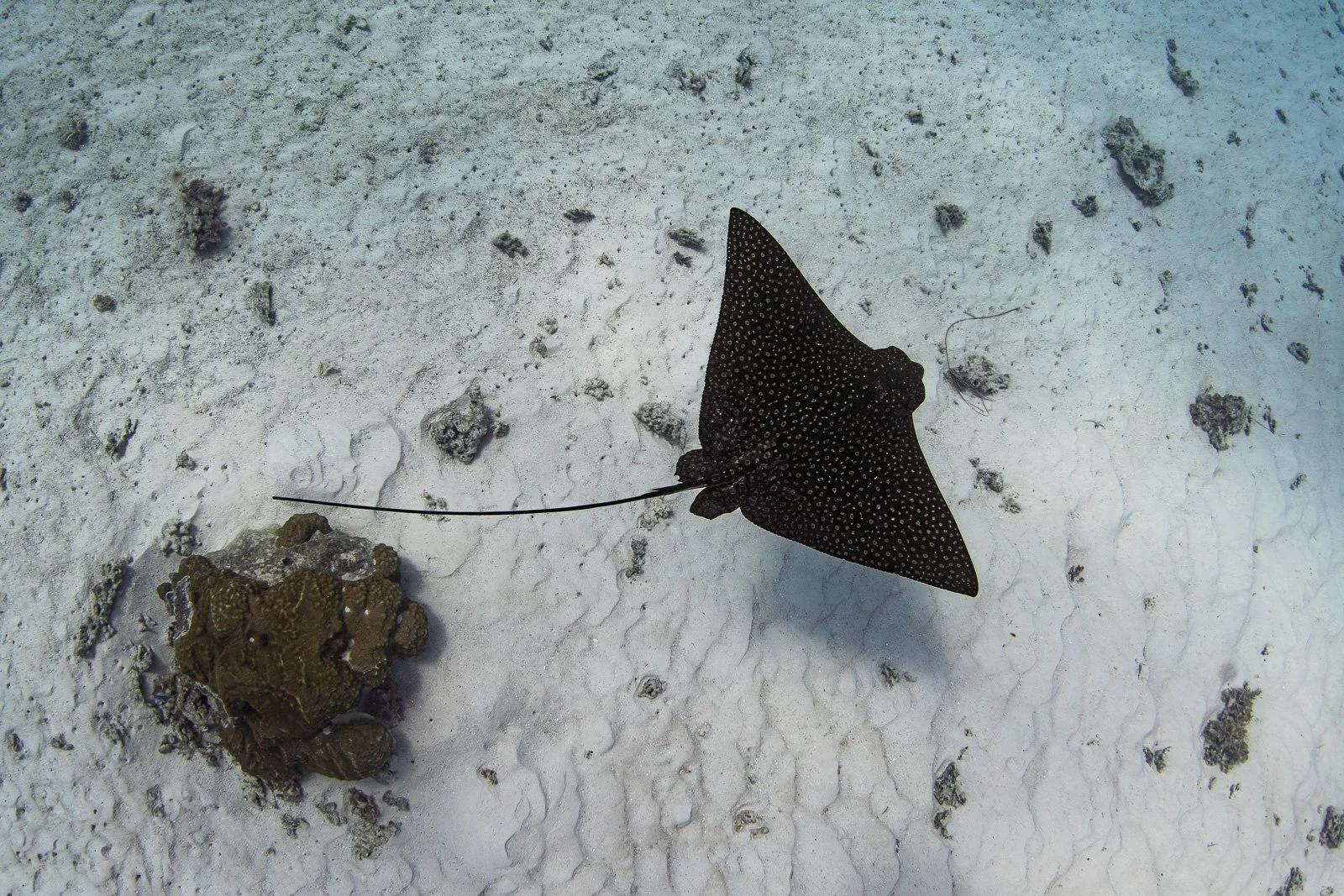
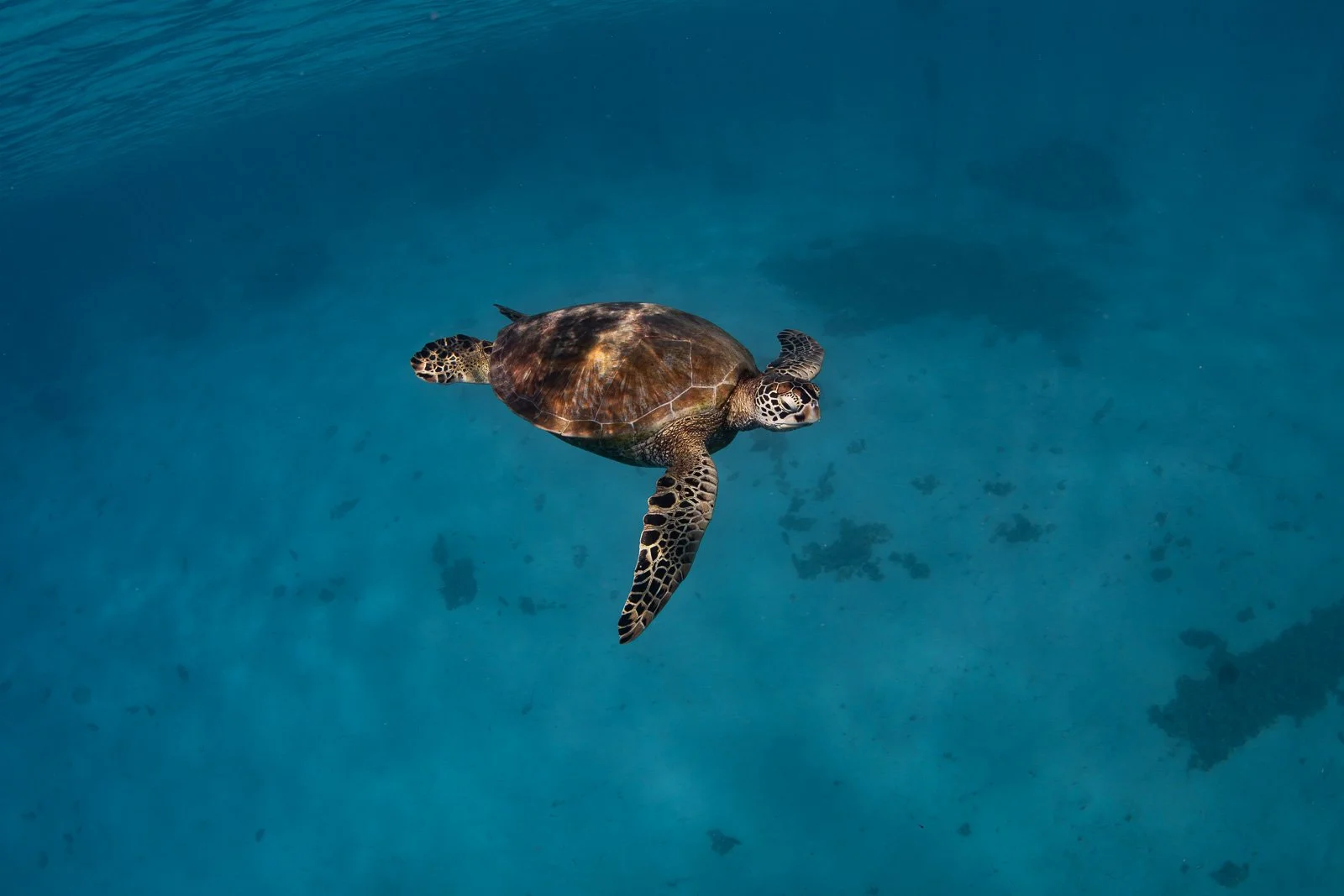
When we wanted a change of pace, we drifted through the local channel searching for turtles and eagle rays. The current would carry us gently back toward shore, and with the water so crystal clear, it felt like snorkeling in an aquarium.
Evenings were their own kind of magic. We tried out local restaurants, flew the drone as the sky lit up with one unforgettable sunset after another, and sometimes just waded into the shallows with a camera, hunting for new subjects in the last light of day.
Photo Tips from Moorea
Photographing humpback whales is unlike anything else. The scale, the movement, and the ever-changing light make it both challenging and incredibly rewarding. Here are a few takeaways from our time in Moorea:
Wide-angle lenses are essential
Whether you prefer a fisheye for dramatic curves or a rectilinear wide-angle for cleaner lines, you’ll need something wide to capture the full size of a whale in frame. These animals are massive, and anything less just won’t do them justice. I have some more information on the best lenses here.
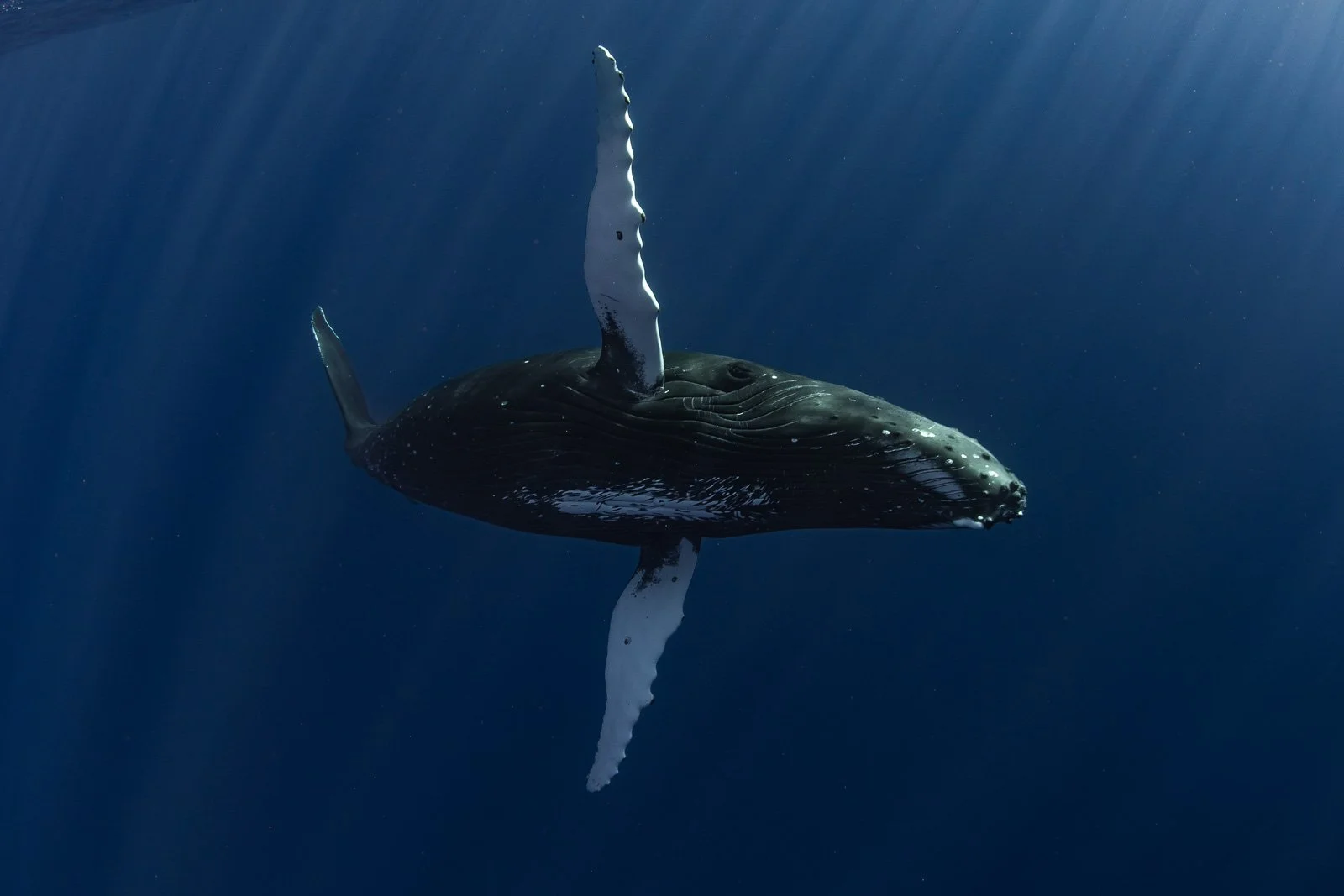
Wide angle is essential to capture scenes like this.
Strobes or no strobes
For whales, leave them behind. Most encounters happen near the surface, where natural light is abundant. Strobes add drag and don’t contribute much at these distances. I bring them on shark dives, but not when I know I’ll be spending the day with humpbacks.
Position in the Water
The way that you position your body in the water makes a big difference. Stay calm and streamline your movements, going with slow and deliberate finning rather than splashing or chasing. Keep your camera at your side while you fin, with one arm extended forward to keep your body streamlined.
Always listen to your guide and take their advice. These guys carry an enormous amount of knowledge about whale behavior and the best ways to approach them. And perhaps most importantly, try to anticipate where the animals will be, not where they are. That small adjustment can make all the difference in getting the shot.
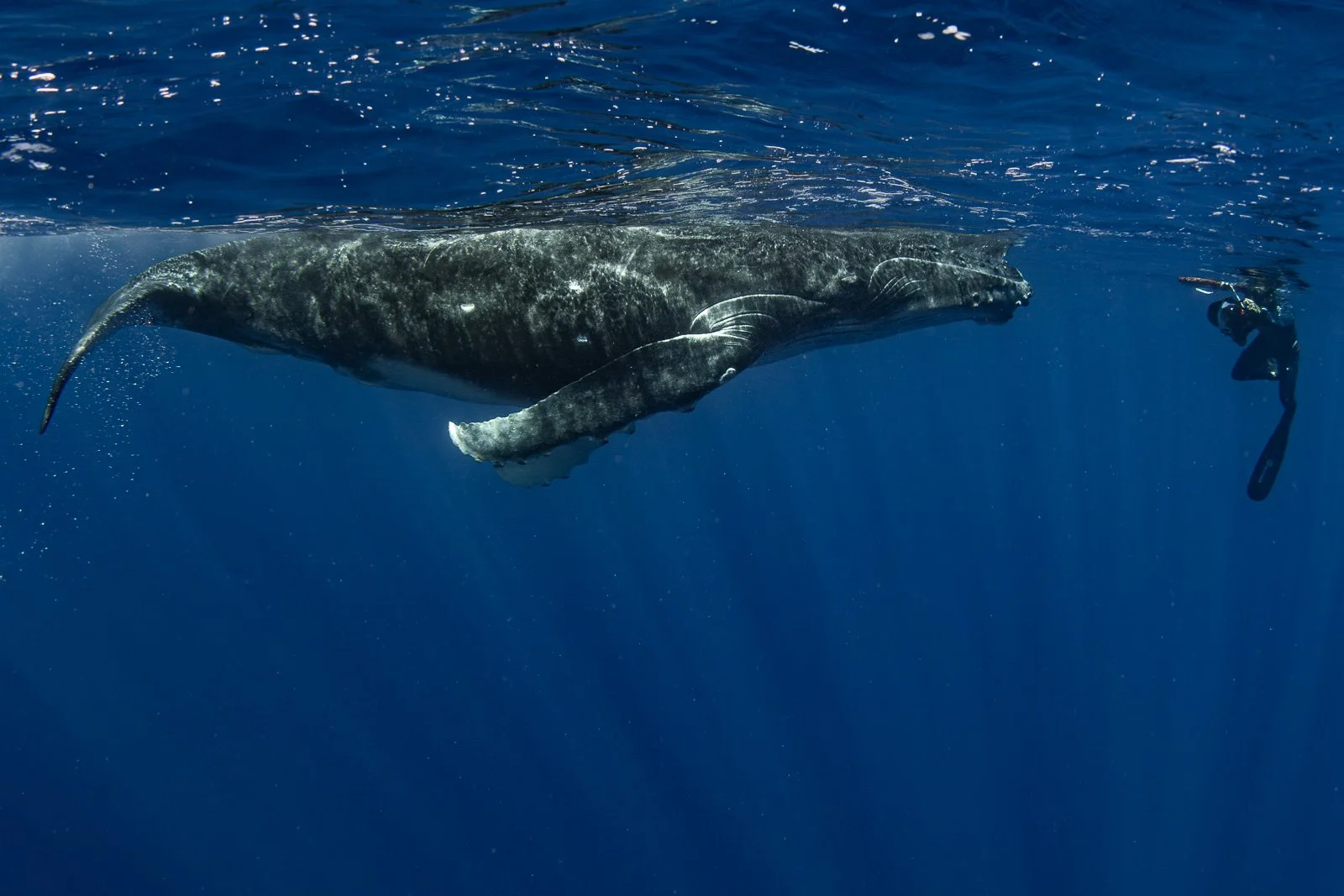
Photographing whale calves requires caution — they move unpredictably.
Respect the Animals
More than anything else, you should remember that these encounters are a privilege and not a given. You must always keep a respectful distance and follow your guide's instructions. Let the whales decide for themselves whether they want to approach. The most memorable memories you get will always happen on the animals' terms, and never in situations where you force yourself into their space. No photograph is worth compromising the safety of yourself or them.
Camera Settings & Split Shots
As Mekan summarised very well, ‘’let the camera work for you’’. Use continuous autofocus with burst shooting to keep up with the whales’ movement. I typically set ISO to auto, shutter speed around 1/200–1/250, and aperture ranging between f/8 and f/11. That balance keeps enough depth of field to hold focus while still letting in plenty of light.
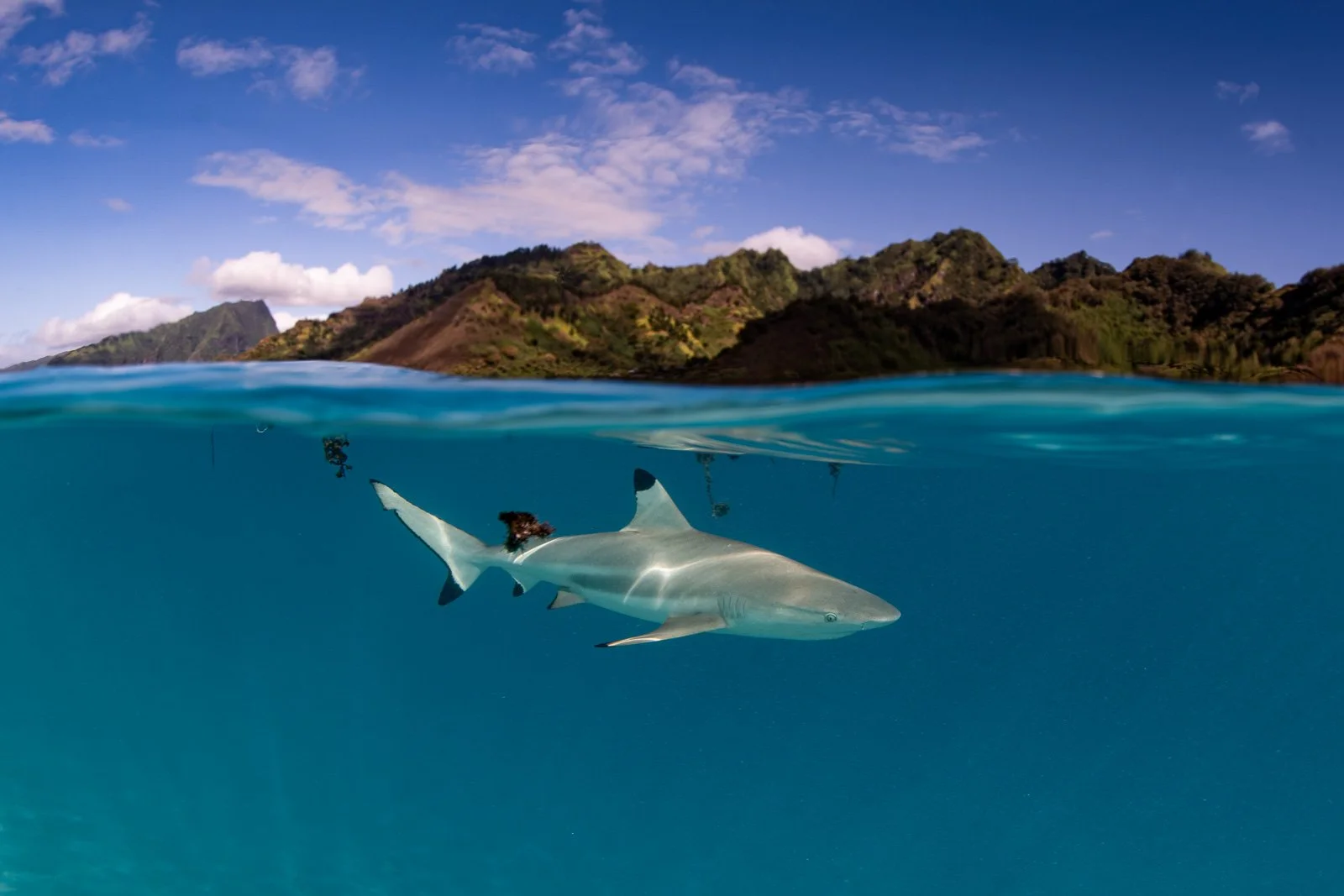
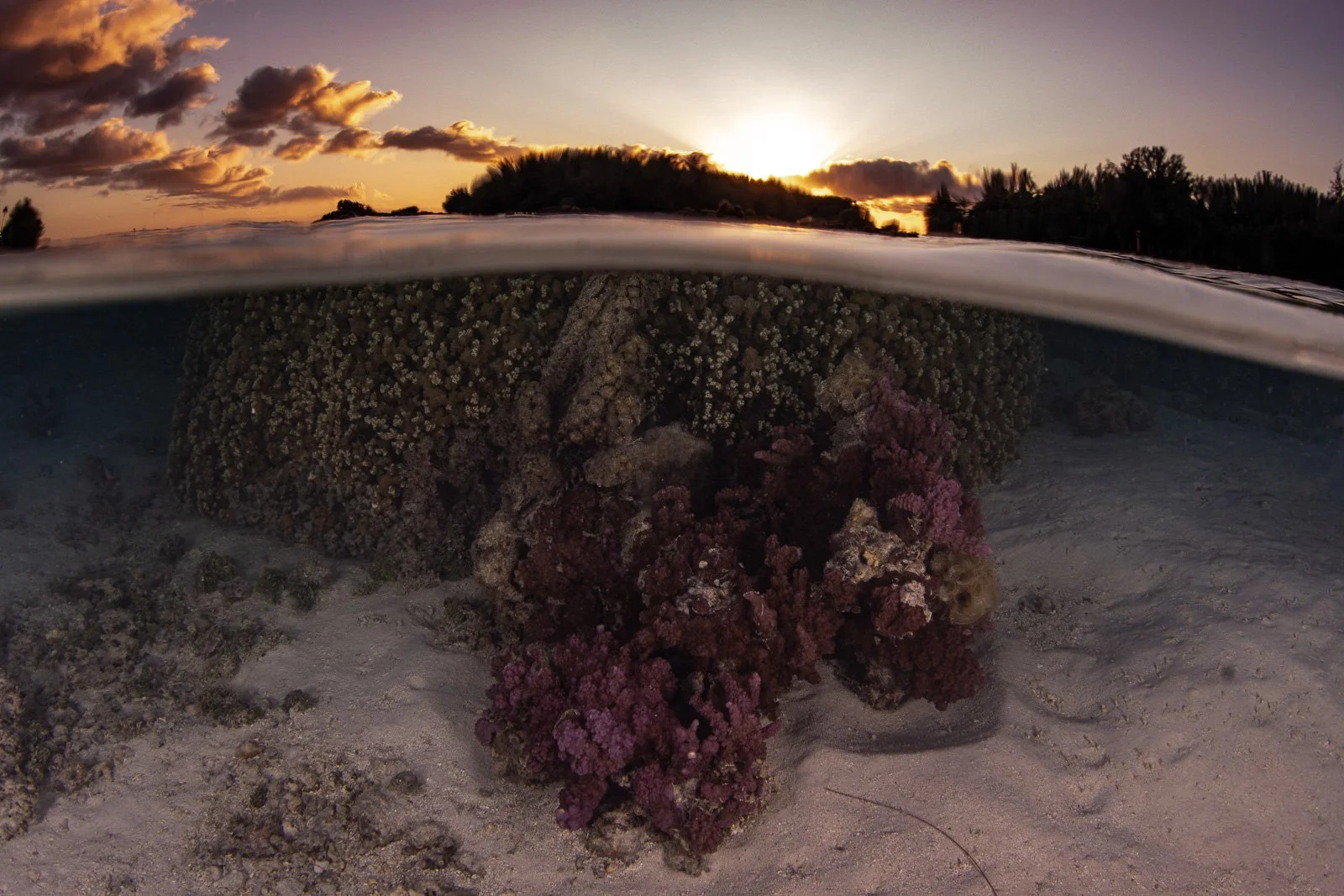
For split shots in the lagoon, I usually bump up the aperture to around f/13 so that both the underwater scene and the mountains above stay sharp. I found a good spot near the edge of the lagoon where the channel begins, far enough to avoid people drifting into the frame. I use back-button focus to lock in and then wait for the sharks to pass by. Since they tend to swim in circles, it’s not hard to anticipate their path.
A higher shutter speed helps freeze the waterline, while letting the camera handle ISO keeps things simple. And for those pesky water droplets on the dome, you can go old school with a little spit or use a drop of baby shampoo.
Final Thoughts
Looking back, it’s hard to put into words just how special those seven days in Moorea were. Spending hours in the water with humpback whales, from sleepers to mothers and calves, felt nothing short of magical. Every day brought something new, and every encounter carried its own kind of wonder.
But it wasn’t just about the whales. Sharing the boat with a group of fellow photographers made the experience even richer. We swapped stories and learned from one another, all while chasing the same dream of capturing these giants in their element.
In the end, it was more than just a photography expedition. It was a week of connection: with the ocean, with the animals, and with people who share the same passion. And that’s what makes a trip like this truly unforgettable.