Chasing Stripes in Hawaii: Photographing Sharks in Oahu
I’ve been wanting to photograph tiger sharks in Hawaii for a very long time. So when I finally had the chance to work remotely from this incredible island for two weeks - right in the middle of tiger shark season - I couldn’t have been more excited.
Getting there, however, turned out to be a small adventure in itself…
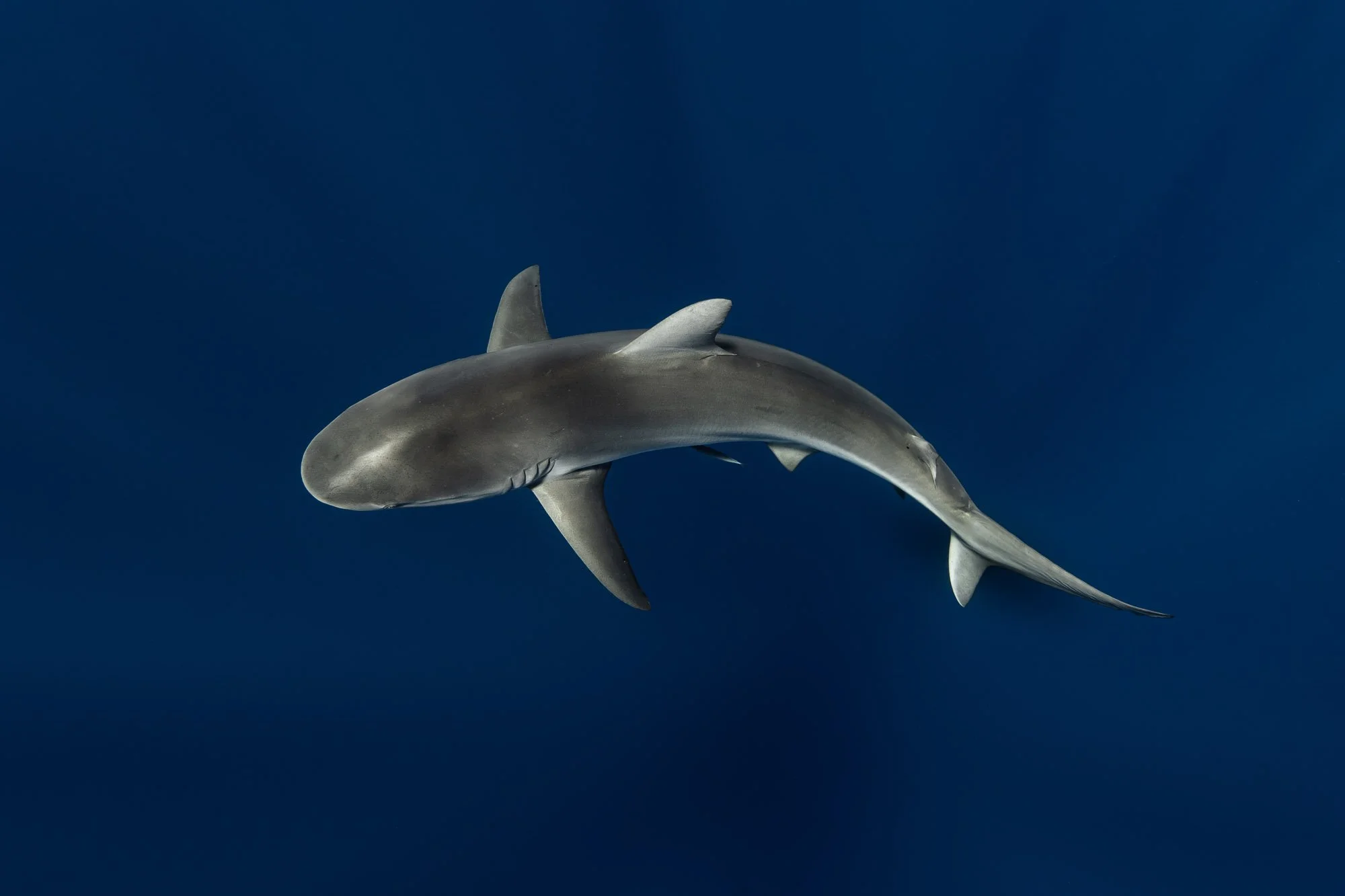
A Galapagos shark gliding calmly beneath me in Oahu’s deep blue.
Getting to Hawaii
To catch up, our connecting flight from San Francisco was delayed, and we completely missed the last flight to Honolulu.
With our car, accommodation, and - most importantly - our morning dives with Hawaii Adventure Diving already booked, we had to improvise.
After a quick brainstorming session at the airport, we decided to buy last-minute tickets to Kahului, Maui, and catch an early flight to Honolulu the next morning.
With the airport's opening hours, it meant that we ended up spending the night outside, under the stars, waiting for the doors to reopen at dawn.
Once we finally arrived in Honolulu, a kind airport employee helped us track down our missing luggage. From there, we picked up our rental car, settled into our Airbnb, and began commuting between Honolulu and the North Shore for our dives.
We had booked at least one session for each weekend day - Saturday and Sunday - making the most of the limited time we had outside our weekday work schedule.
The journey is not actually too bad, only 30 to 45 minutes on average, and care rental is an absolute must.
I’d highly recommend booking in advance, as availability can be limited and prices rise quickly during the busy season. Driving on the island is a bliss compared to the continental US - here, people are chill (aloha).
Why do I Want to Photograph Tiger Sharks in Hawaii?
Places like Tiger Beach in the Bahamas, Fuvahmulah in the Maldives, and Beqa Lagoon in Fiji are often celebrated as the world’s best destinations for tiger shark encounters - with near-guaranteed sightings and countless dive operators offering close interactions.
Yet, that’s exactly why I’ve chosen not to photograph tiger sharks there.
This may sound confusing, but it actually makes a lot of sense for me personally.
A Changing Attitude to Ocean Photography
I’ve noticed my approach to underwater photography has started to shift over the past few years. We’ve begun taking more trips that aren’t conventional scuba dives, but a mix of swimming, freediving, and snorkeling.
These are expeditions — often referred to as ocean safaris — led by ethical, passionate, and highly knowledgeable operators who genuinely care about the health of their local marine ecosystems. They’re more challenging than standard tours, but also infinitely more rewarding. On these trips, I’ve begun using my strobes less and less, choosing instead to rely on natural light and focus more on behaviour, storytelling, and conservation.
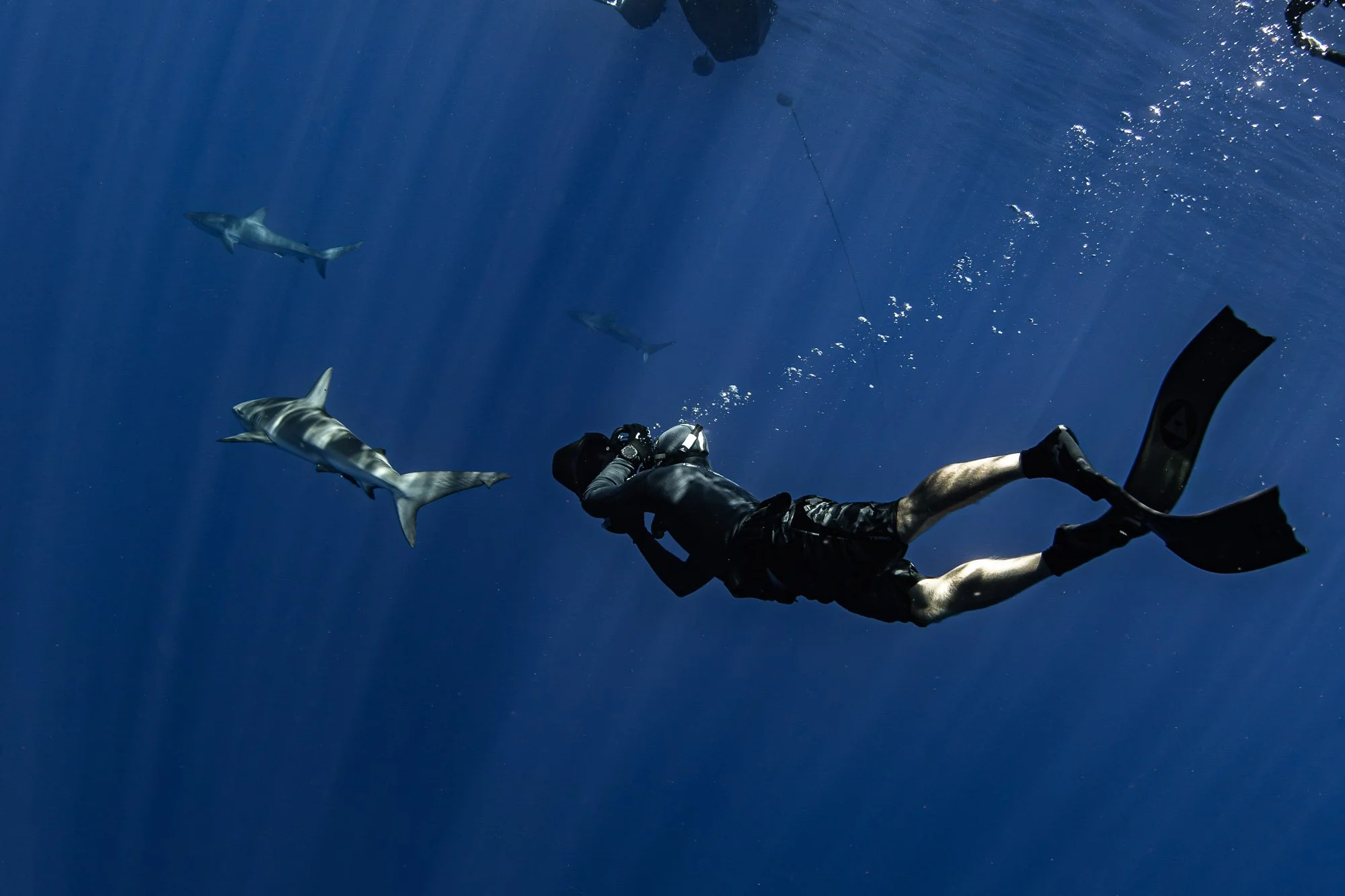
Freediving alongside Galapagos sharks during an ocean safari in Oahu — a slower, more intimate way to photograph their natural behaviour.
My blog section has a collection of these stories, and you can also see a few of the most popular ones below:
We’ve gone from reef diving to exploring the open ocean, where any encounter is possible - even the most spectacular ocean phenomena. These experiences happen on nature’s terms and feel more authentic and unrestricted than scuba diving.
Enter Hawaii
That’s why Hawaii stands apart.
Here, chumming and baiting are completely banned, which means every shark encounter unfolds on the animal’s own terms. The sharks that show up are not responding to a feeding cue; they’re simply passing through, following their instincts and seasonal migrations.
It’s said that the noise of boat engines still attracts some sharks in Hawaii - a behavior tied to local fishermen throwing leftover fish scraps overboard after a day at sea. But unlike other destinations where feeding has become the norm, Hawaii maintains a delicate balance between human curiosity and wildlife respect.
Tiger sharks are most commonly seen around Oʻahu from June through November, when mature females return to nearshore waters to give birth and mate. It’s the perfect time for freedivers and photographers hoping to witness these magnificent animals in a truly wild setting - no cages, no tanks, no feeding, just patience and presence.
For me, that’s the essence of underwater photography: earning the encounter and letting nature decide when - and if - it happens.
When the Tigers Don’t Show Up
Despite all the planning, gear prep and early‐morning alarms, the ocean reminded us who is in charge. We didn’t cross paths with a single tiger shark during our sessions off Oʻahu - yet the trip was far from a disappointment. Instead, we were treated to numerous encounters with Galapagos sharks (Carcharhinus galapagensis).
Galapagos sharks are a type of requiem shark, known for their classic “shark” silhouette. Despite the name, they’re not limited to the Galapagos Islands - they thrive in tropical waters worldwide. Calm, confident, and effortlessly photogenic, they were the perfect subjects to capture their graceful beauty.
Hawaii Adventure Diving runs its shark dives in small, two-hour slots - efficient and well-organized since the dive site is only about 20–25 minutes from shore. The short distance means more time in the water and less time commuting, which is always a win.
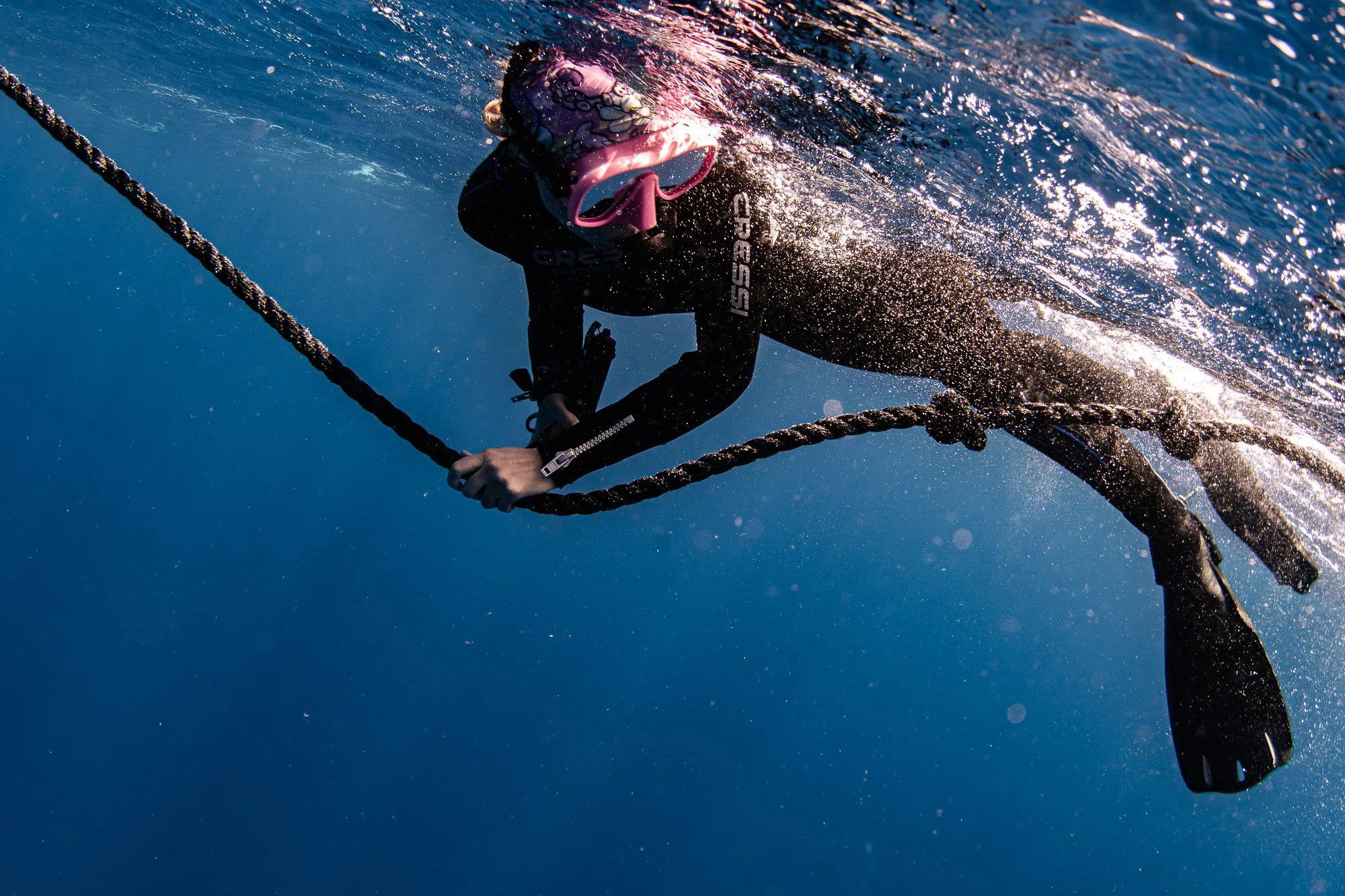
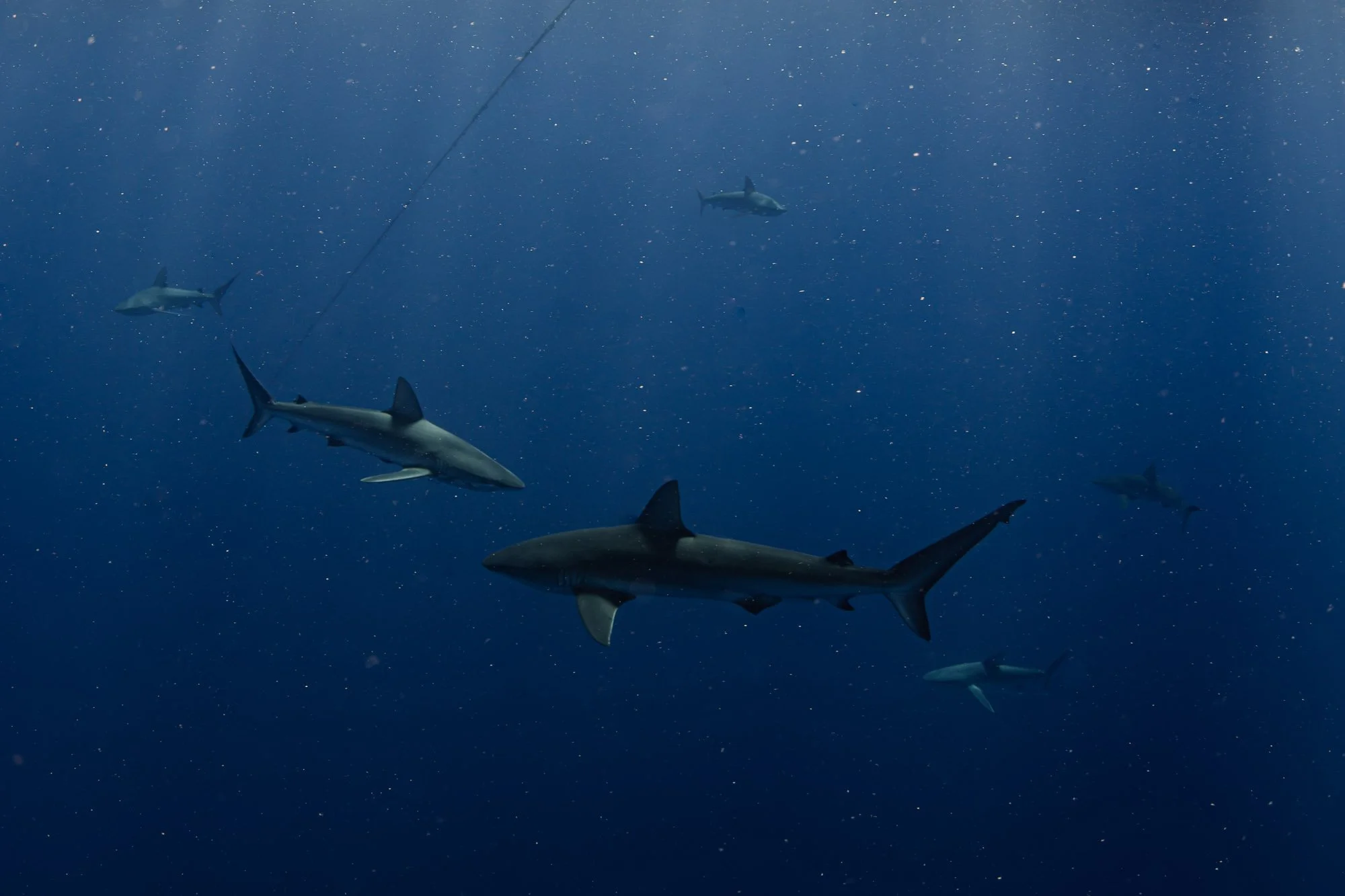
As anywhere in the open ocean, conditions can change quickly - one morning the surface is flat and glassy like a mirror, the next it’s rolling and choppy. But no matter the weather, we never had trouble finding sharks (or rather, having them find us). As soon as the boat engine started, curious shapes began to appear from the blue.
The crew at Hawaii Adventure Diving were fantastic - friendly, professional, and clearly passionate about what they do. Their trips attract a wide range of guests, from first-timers seeing a shark for the very first time to seasoned photographers chasing that perfect frame.
Photographing Galapagos Sharks
We spent two weekends diving with Galapagos sharks, and each session unfolded with its own rhythm. The first weekend gifted us perfect conditions: clear blue water, long lines of visibility, and just enough suspended particles to catch the light in a beautiful, cinematic way.
The second weekend couldn’t have been more different. The water was filled with fine particles drifting in the current - a backscatter nightmare under normal circumstances. But this time, I decided to embrace it.
The flecks reminded me of stars across a night sky, giving every frame a soft, dreamlike atmosphere. I waited until three or four sharks glided past in perfect formation, their movements aligning just as I’d imagined. That was the moment the image finally came together.
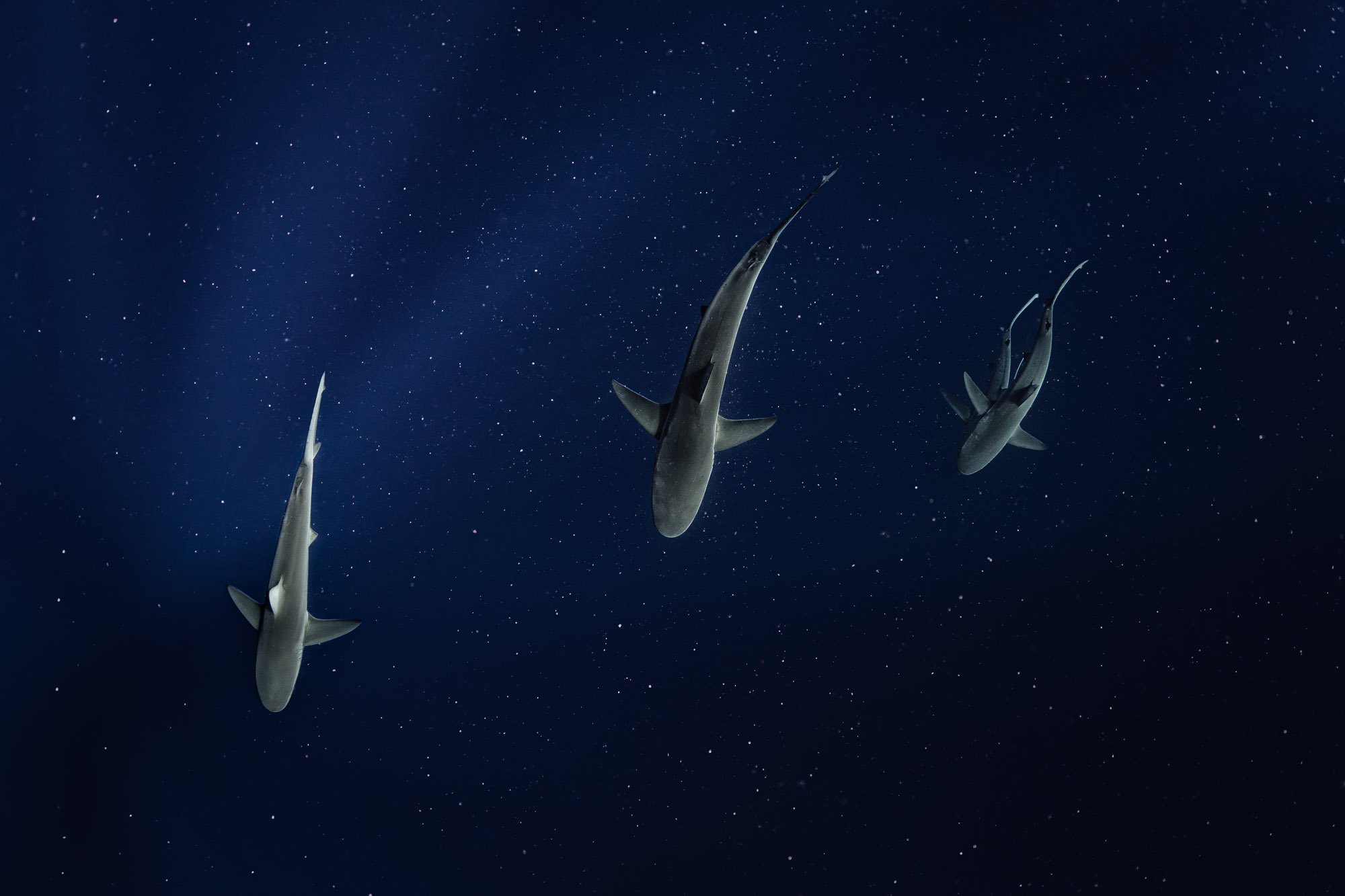
Three Galapagos sharks gliding in formation through particle-filled water, like stars in a dark ocean sky.
Most of the time, we hovered near the surface while the sharks cruised a few metres below, moving with that calm confidence that defines the species. Some dives brought a dozen individuals, others just a handful.
Before freediving down, we always spent a few minutes observing from above - watching their behaviour, reading their energy, and trying to understand the mood of the group.
The more time you spend with sharks, the more you begin to recognise the fluidity in their movements. There’s a quiet precision to the way they navigate the water. I’ve learned that the best way to earn their trust is to mirror that energy - slow, steady, and completely in rhythm with the ocean.
The more you match their pace, the closer they’re likely to come. And those are the moments when the most intimate, natural photographs happen.
Until Next Time
We didn’t see a single tiger shark on this trip - but that’s the reality of wildlife encounters. Nothing is promised. The ocean chooses what it wants to reveal.
Even without the tigers, being able to see and photograph Galapagos sharks up close was an unforgettable experience. It was fascinating to witness how shark diving is approached in a different part of the world, each location with its own rhythm, rules, and relationship with the animals.
We’ll definitely be back next year, right in the heart of tiger season, to try our luck again.